

When emergencies happen in cities, help is often minutes away. In rural and remote Australia, that’s rarely the case. Medical assistance may be hours or even days from reaching you. That reality is exactly why remote first aid in Australia requires a different mindset, skill set, and level of preparation.
What is remote first aid?
Remote first aid refers to providing emergency care in isolated or hard‑to‑reach locations where access to medical services is delayed due to distance, terrain, weather, or limited infrastructure.
In Australia, this often includes:
- Rural towns and farming regions
- Mining and exploration sites
- Outback roads and stations
- National parks and wilderness areas
- Offshore and remote coastal locations
In these settings, first aiders may need to manage injuries, illness, or trauma for extended periods before evacuation or medical support is available.
Why remote first aid is different in Australia
Australia’s geography plays a major role in emergency response times. Large distances, limited road access, and sparse populations mean that ambulances, rescue aircraft, or medical teams may take significantly longer to reach a patient.
That’s why rural and remote first aid focuses on:
- Prolonged patient care
- Careful use of available resources
- Clear communication with emergency services
- Recognising when evacuation is essential
In remote environments, decisions made early can have a major impact on outcomes.
Core principles of remote first aid
While every situation is different, there are three key principles that guide safe remote first aid responses.
1. One patient is enough
In remote settings, rescuer safety comes first. Taking unnecessary risks can quickly turn one casualty into multiple patients. Always assess hazards, environmental risks, and your own limitations before intervening.
2. Stabilise, but know when hospital care is essential
Remote first aid is about stabilising a patient and preventing deterioration, not replacing medical treatment. Knowing who must get to the hospital and how urgently is a critical skill.
3. Know your limits and call for help early
Training builds confidence, but it also teaches boundaries. Remote first aiders must recognise when a situation exceeds their scope and activate emergency services early, even if help will be delayed.
Using tools like the Emergency+ app can help emergency services locate you faster in remote areas.
Remote first aid vs standard first aid: what’s the real difference?
A standard first aid course is incredibly valuable, but it’s usually designed around a key assumption: help is coming soon. In metro areas, that’s often true. In remote settings, it may not be. That’s the gap that remote first aid in Australia aims to bridge.
The duration of care is longer
In rural and remote environments, the duration of care can stretch from minutes to hours. That changes everything, from how you manage pain and bleeding to how often you reassess the patient, record changes, and watch for deterioration.

Environmental exposure becomes part of first aid
Remote situations also come with greater environmental exposure. Heat, cold, wind, rain, rough terrain, and limited shelter can worsen injuries and accelerate deterioration. Protecting a patient from the environment becomes part of first aid, not something you do 'if you have time.'
Equipment availability is limited
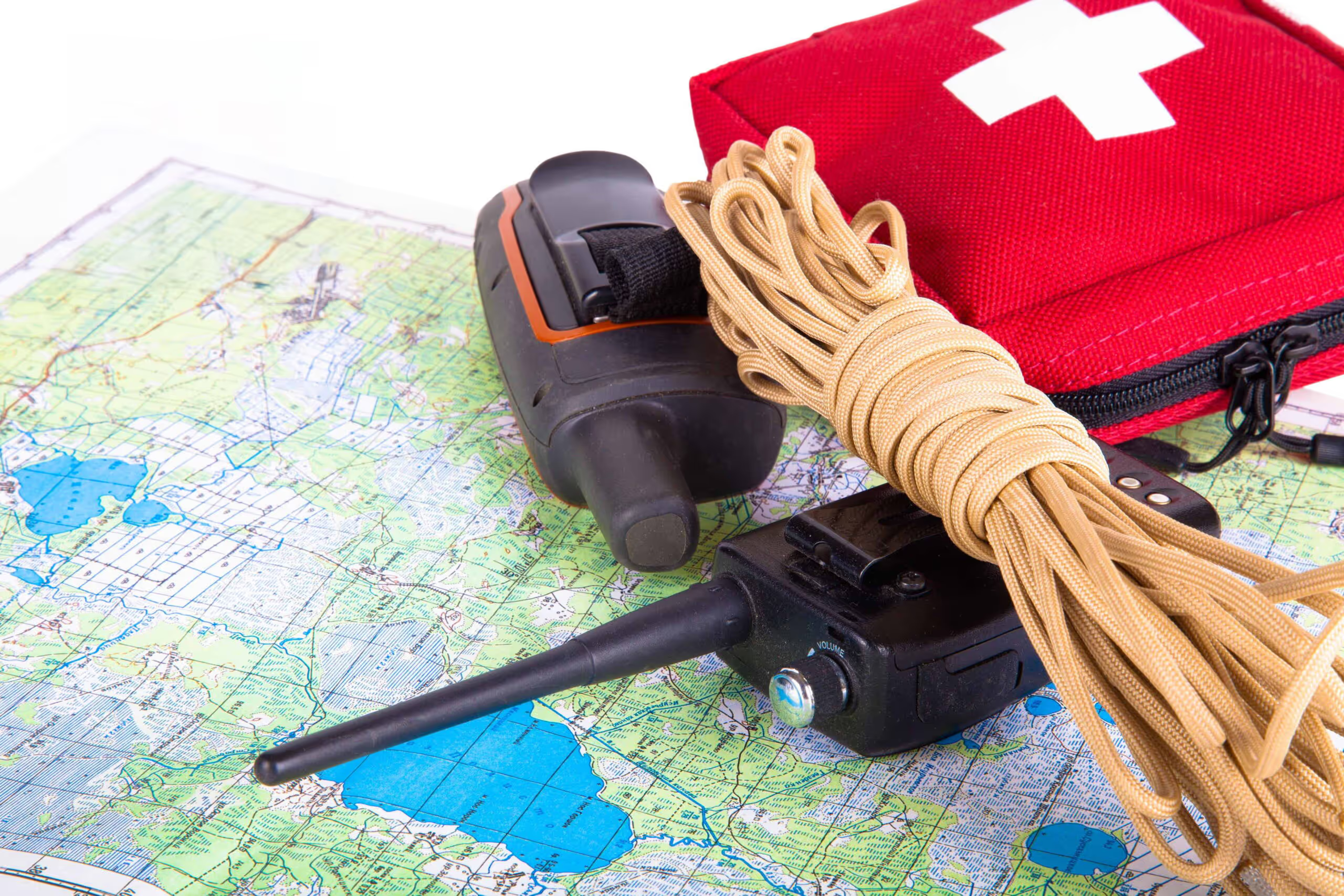
There’s also the reality of equipment availability. In a workplace or city setting, you may have a stocked first aid room, an AED, or multiple trained people nearby. In remote locations, you might be working from a smaller kit, improvising materials, and relying on communication tools to bring help to you.

Decision-making responsibility is higher
Remote care carries more decision-making responsibility. You may need to determine when to call for help, when to escalate, whether it’s safer to stay put or move, and how to manage the patient over time while waiting for retrieval. Remote first aid training doesn’t turn someone into a paramedic, but it does build better judgment, better planning, and a clearer understanding of your limits.
Why remote first aid training matters
In remote environments, the first aider may be the only source of care for an extended time. That makes training essential, not optional.
Proper remote first aid training helps people manage trauma, illness, and environmental injuries; improvise equipment when standard supplies aren’t available; monitor patients over long periods; communicate effectively with emergency services; and stay calm and organised under pressure.
Training also helps first aiders understand the legal and ethical responsibilities of providing care in isolated settings.
HLTAID013: Provide First Aid in Remote or Isolated Sites
The HLTAID013 – Provide First Aid in Remote or Isolated Sites course is Australia’s nationally recognised qualification for people working or travelling in remote areas.
This course is designed for:
- People working in mining, oil and gas, and exploration
- Remote workers and contractors
- Outdoor guides and recreation leaders
- People travelling or living in isolated locations
Remote first aid training goes beyond standard first aid and includes:
- Managing emergencies when help is delayed
- Prolonged patient care and monitoring
- Trauma management in austere environments
- Environmental injuries (heat, cold, dehydration, bites and stings)
- Improvising equipment and managing limited resources
- Legal and ethical considerations in remote care
Hands‑on scenarios help participants practise skills in conditions that reflect real remote environments.
Many remote workplaces pair HLTAID013 with HLTAID014 Provide Advanced First Aid or HLTAID015 Provide Advanced Resuscitation and Oxygen Therapy for higher-risk sites.
Remote paramedic training and higher‑level response
For organisations operating in high‑risk or very isolated environments, remote paramedic training or advanced first responder programs may be appropriate.
These higher‑level courses build on first aid foundations and focus on:
- Advanced patient assessment
- Extended care decision‑making
- Coordination with retrieval services
- Managing complex medical emergencies over time
They are commonly used in industries such as mining, energy, and remote infrastructure projects.
Preparation matters when help is far away
When emergency response times are long, the actions taken in the first minutes can shape outcomes. Remote first aid focuses on safety, decision‑making, and realistic care until help arrives.
With the right training and planning, individuals and organisations can reduce risk, respond confidently, and support better outcomes in Australia’s rural and remote environments.
HLTAID013 runs at public venues across NSW, QLD and VIC, and IPC can also deliver it on-site for workplace teams.
If you work or travel beyond immediate access to medical care, investing in remote first aid training isn’t just smart, it’s essential. Contact International Paramedic College today to start your remote first aid course.
When an emergency hits, the hardest part isn’t always the chaos - it’s the gap. The minutes between calling Triple Zero (000) and hearing the siren can feel long, even when help is on the way.
This guide is designed to help you stay useful (and safe) while you’re waiting for an ambulance. It combines practical first-aid priorities with a simple plan you can follow, even when you’re stressed.
Table of contents