


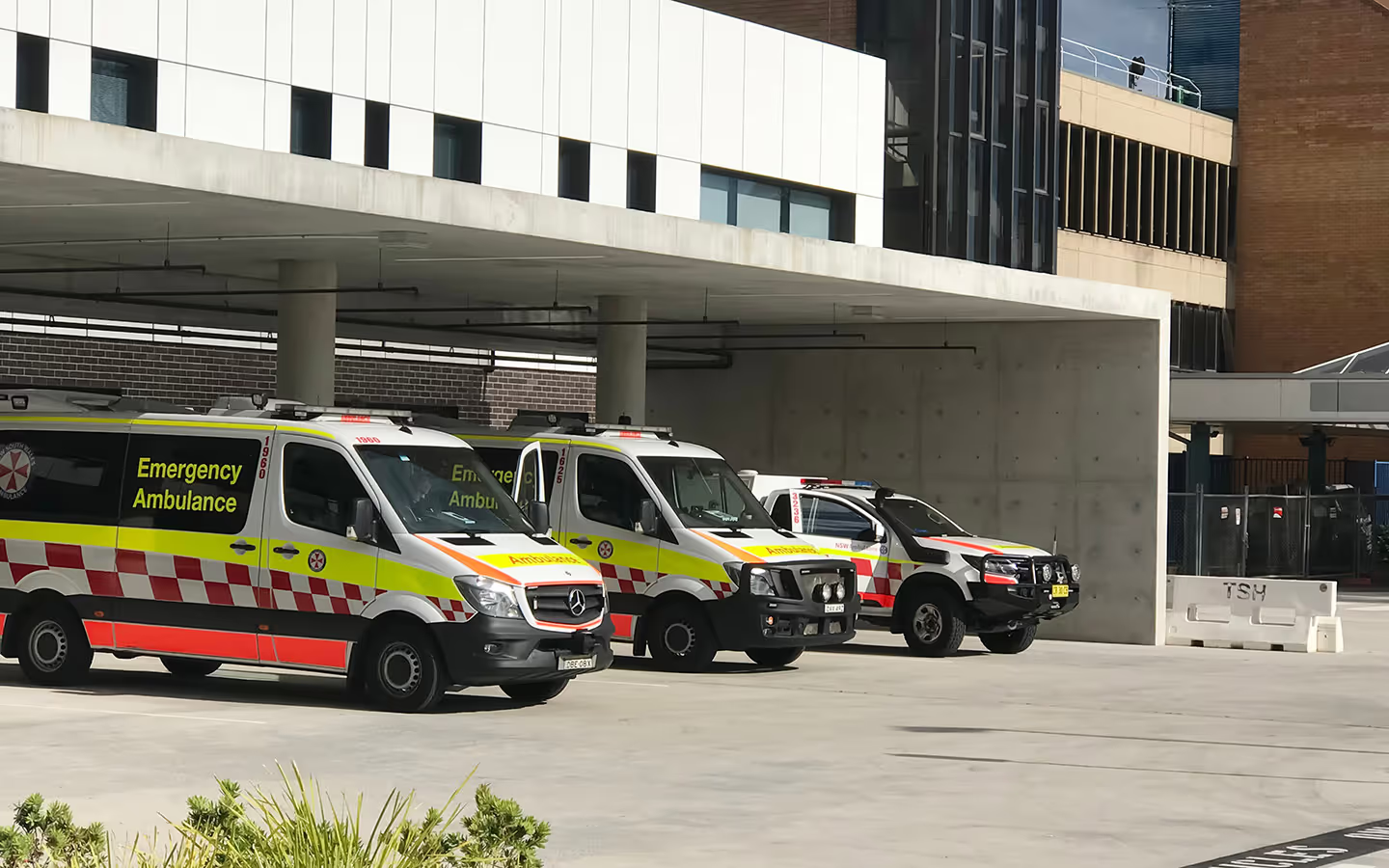
When an emergency hits, the hardest part isn’t always the chaos - it’s the gap. The minutes between calling Triple Zero (000) and hearing the siren can feel long, even when help is on the way.
This guide is designed to help you stay useful (and safe) while you’re waiting for an ambulance. It combines practical first-aid priorities with a simple plan you can follow, even when you’re stressed.
Start here: call 000 early and stay on the line
If you’re not sure whether to call, it’s better to call early and get advice. Once you’re connected, the call-taker can guide you through what to do next.
When you call:
- Speak clearly and answer questions as best you can
- Follow instructions (they’re trained to prioritise the next safest step)
- Don’t hang up until you’re told to
If you don’t know your exact location
If you’re in a park, beach, bush track, or unfamiliar area, use the Emergency+ app to help communicate where you are. It can provide your GPS coordinates and (in many cases) a location to share with the operator.
If you're somewhere help could take hours to reach, read our guide to remote first aid in Australia.
What to do until the ambulance arrives
Here is a list of 5 things you should do in an emergency while you are waiting for the ambulance to arrive
Stay calm enough to think
First aid is mostly common sense, but you need enough calm to access it. Slowing your breathing and grounding yourself helps you think clearly and choose the safest next action for the patient.
- Take one slow breath
- Speak out loud: “Help is coming. What’s the next best step?”
Make the scene safe (for you, the patient, and others)
Before you rush in, look for hazards. A quick scan of the environment helps you avoid becoming the second patient and keeps the scene safer for everyone.
- Traffic, water, electricity, smoke/fire, unstable surfaces
- Needles, broken glass, aggressive animals, violence
- Crowds that block access for responders
If it isn’t safe, move away and keep others back. You can’t help if you become the second patient.
Check response and breathing
This is the fork-in-the-road moment. What you do next depends entirely on whether the person is conscious and breathing normally, so take a few seconds to check carefully.
- If unresponsive and not breathing normally: start CPR
- If unresponsive but breathing: protect the airway (recovery position)
- If responsive: assess and treat what you can
Control major bleeding
Severe bleeding can be life-threatening within minutes. Your job is to slow the blood loss as quickly as possible using whatever clean materials you have.
- Apply firm direct pressure
- Use a dressing, towel, clothing - whatever you have
- Don’t keep lifting it to “check” if it’s working
It helps to take a stop the bleed course to learn how to do this properly.
Prepare for the paramedics
Small actions can make a big difference when help arrives. Taking a moment to prepare the scene helps paramedics work faster and focus immediately on patient care instead of access or safety issues.
- Unlock doors/gates and turn on outside lights
- Keep pets secured
- Send someone out to direct the ambulance in
- Have the patient’s meds/allergies/medical history ready if possible
These steps will help you manage a patient until the ambulance arrives, but they are not a substitute for proper first aid training or CPR training.
%2520copy.avif)
Use DRSABCD to guide your next step
If you’ve done first aid training, you’ve probably heard of DRSABCD. It’s a simple, structured framework used across Australia to help first aiders manage almost any medical emergency in a calm, logical order.
The strength of DRSABCD is that it stops you from skipping critical steps when adrenaline is high. Each letter prompts you to pause, reassess, and focus on what matters right now as you wait for an ambulance.
Here’s what each step means in practice:
- D – Danger: Check for hazards before approaching. This could include traffic, fire, electricity, water, aggressive behaviour, or anything else that could put you or others at risk.
- R – Response: Gently check if the person responds by talking to them or applying a painful stimulus (such as squeezing the shoulder). No response means the situation is more urgent.
- S – Send for help: Call 000 immediately or direct someone else to do it. If an AED is available nearby, send someone to get it.
- A – Airway: Make sure the airway is open and clear. Look for obstructions and use simple airway positioning if required.
- B – Breathing: Look, listen, and feel for normal breathing. Abnormal or absent breathing means you must act quickly.
- C – CPR: If the person is not breathing normally, start CPR straight away.
- D – Defibrillation: Use an AED as soon as it’s available and follow the voice prompts.
Common mistakes to avoid when waiting for an ambulance
These are the classic “well-intentioned” actions that can make things worse, mainly because they can increase injury risk, delay treatment, or make it harder for paramedics to assess the situation.
- Don’t move the person unnecessarily
- Don’t give food or drink 'just in case'
- Don’t let them walk around if they’re faint, injured, or unwell
- Don’t delay calling 000 while you look things up
- Don’t drive them yourself unless there are truly no other options
First aid community education and training
International Paramedic College is a local and regional first aid training provider and has a strong focus on local communities. We run a number of free courses and programs in our local community in regional Australia.
Our What to do until the Ambulance Arrives course is a 3-hour program we have developed that covers a basic emergency management plan and includes CPR. The importance of managing major bleeding and what to do with an unconscious patient to protect their airway.
We can run this first aid community education program for local community groups such as:
- Local schools
- Local community groups
- Churches
- Childcare groups
- Volunteer groups
- Disability and respite care groups
Need an accredited certificate for work? We also run nationally recognised first aid courses at public venues across NSW, QLD and VIC.
Stay calm, stay useful
The goal while waiting for an ambulance is simple: stay safe, keep the person alive, and prevent things from getting worse.
If you only remember three things, make it these:
- Call 000 early and follow instructions
- Check breathing and act fast (recovery position or CPR)
- Control major bleeding and keep the patient still and warm
A calm bystander with a plan can make a real difference, even before the paramedics arrive.
Already trained? Check whether your certificate is still current with our guides to first aid renewal and CPR renewal.
Table of contents