

HLT31220 Certificate III in Basic Health Care
The HLT31220 Certificate III in Basic Health Care is a nationally recognised qualification designed for people seeking an entry point into the health industry.



What is the HLT31220 Certificate III in Basic Healthcare?
This qualification provides foundational skills and knowledge to support introductory health care, safety and client support across a range of health and community service settings.
Delivered through flexible online learning, the HLT31220 Certificate III in Basic Health Care focuses on first aid, infection control, medical terminology, anatomy and physiology, and workplace health and safety.
- Entry-level qualification for people seeking a pathway into health
Develop core first aid and safety skills to work in health or community service environments - Flexible online learning that builds the skills and knowledge to respond to health concerns


Location
Australia Wide

Delivery mode

Course duration
.svg)
Upcoming intake

Cost

Payment plans



Start with skills you can actually use
Getting started in healthcare should feel achievable. This course focuses on building essential, real-world skills from day one, helping you develop confidence in practical situations while keeping the learning process simple and supported.
HLT31220 Certificate III in Basic Health Care
- Shorter course duration
- Lower overall prices than most RTOs
- Remote study option reduces travel and time off work
- Pay-As-You-Go payment plans available
- Learning focused on real-world skills
Other RTOs
- Delivery models vary between providers
- Practical sessions instruction may be outsourced or limited
- Fixed intake dates and less flexibility
- Variable levels of trainer access and student support
- Less emphasis on private-sector urgent response pathways
HLT31220 Certificate III in Basic Healthcare Overview
This HLT31220 Certificate III in Basic Health Care course equips students with the foundational competencies required to support health services safely and effectively. The qualification covers first aid, infection control, body systems, medical terminology, and WHS practices relevant to entry-level health roles.
Is this the right course for you?
This course is suitable for individuals who want to gain a Certificate qualification in fundamental health care, develop core first aid and safety skills, and work in health or community service environments.
It is ideal for those looking to build confidence in client support needs and health support roles, or to prepare for further training options in health or emergency services.
Course structure
What you’ll learn
Throughout this course, you’ll develop practical and theoretical skills and knowledge to access the student portal for additional resources.
- Provide introductory first aid, including CPR on an adult, as part of the course commencement requirements.
- Apply infection control and security procedures
- Understand anatomy and physiology, and healthy body systems
- Use medical terms in health service settings
- Support safe client welfare and basic patient care.
- Apply workplace health and safety principles
Units of competency
HLTAAP001 – Recognise healthy body systems
Based onlineWhat is this unit?
This unit describes the knowledge required to work with entry-level information about the human body and to endorse and promote ways to maintain the healthy functioning of body systems. It applies to any worker who needs to use and interpret information referencing anatomy and physiology.
Why it matters
Understanding how the body’s systems function is essential for safe and effective assistance in health, community and healthcare support roles. This unit helps build confidence in interpreting health information, recognising healthy body function, and supporting positive outcomes for clients.
What you’ll learn
You’ll learn to interpret health terminology and information about the structure, function and interrelationships of major anatomical systems, review factors that contribute to healthy body function, and use and share this knowledge to enhance work activities.
How you’ll be assessed
Assessment requires you to demonstrate your competence by interpreting and following instructions with clinical terminology, producing documents using correct terminology, using terms accurately in oral communication, and identifying abbreviations in context.
Practical benefit
Completing this unit equips you with the confidence to work effectively in healthcare administration, healthcare reception, allied health support or similar roles where accurate medical communication is essential.
BSBMED301 – Interpret and apply medical terminology appropriately
Based onlineWhat is this unit?
This unit covers the skills and competencies required to understand and respond to instructions, carry out routine tasks, and communicate effectively in the health care sector using appropriate clinical terminology. It applies to individuals working in health-related administration contexts.
Why it matters
Accurate use of medical terminology and the ability to follow instructions are essential for safe and efficient healthcare administration. This unit ensures you can communicate clearly with patients, colleagues, and health professionals, reducing errors and improving the quality of treatment.
What you’ll learn
You’ll learn to interpret and follow instructions using clinical terminology, carry out routine administrative tasks, and communicate accurately in both oral and written formats. You’ll also use checklists, abbreviations, and workplace procedures to support safe and effective operations.
How you’ll be assessed
Assessment includes demonstrating your ability to interpret and follow instructions containing paramedical terminology, complete documentation accurately, and use healthcare terminology correctly in oral communication. Evidence is gathered in simulated real workplace scenarios.
[H5] Practical benefit
Completing this unit equips you to confidently manage administrative responsibilities in health settings, communicate professionally using clinical terminology, and support healthcare teams effectively. It provides a foundation for further upskilling in medical admin or health support roles.
HLTINF006 – Apply basic principles and practices of infection prevention and control
Based onlineWhat is this unit?
This unit covers the knowledge required to apply entry-level infection prevention and control principles in the workplace. It includes implementing standard and transmission-based precautions, responding to infection risks, and following national standards and workplace procedures.
Why it matters
Infection prevention and control is critical to keeping both workers and clients safe. By understanding how infections are transmitted and learning how to manage risks, you can reduce the spread of disease, protect yourself and others, and maintain a safe and healthy work environment.
What you’ll learn
You’ll learn to identify infection risks, apply standard and transmission-based precautions, respond to exposure to infectious materials, follow cleaning and waste procedures, and communicate and document disease control measures according to workplace policies and national guidelines.
How you’ll be assessed
Assessment requires demonstrating your ability to apply infection prevention and control in real or simulated workplace scenarios. Show proficiency in handling at least three different infection risks, including hand hygiene, correct personal protective equipment (PPE) use, environmental cleaning, and managing exposure incidents.
Practical benefit
Completing this unit ensures you can maintain a safe and hygienic work environment, protect yourself and others from infection, and respond effectively to exposure risks. These skills are essential for health assistance, paramedical support, and other roles where infection prevention is critical.
HLTWHS002 – Follow safe work practices for direct client care
Based onlineWhat is this unit?
This unit covers the abilities needed to follow safe work practices, protecting your health and well-being and that of others in direct client wellbeing. It includes work health and safety (WHS), manual handling, infection control, hazard identification, risk management, and safe work behaviours.
Why it matters
Safe work practices are essential in health and support environments because they help protect workers, clients and others from injury, illness and workplace hazards. Understanding and applying WHS principles ensures compliance with legislation and reduces risk of harm.
What you’ll learn
You’ll learn to follow workplace policies and procedures for safe work practices, identify and report hazards, apply control measures for manual handling and infection control, and contribute to a safe work culture.
How you’ll be assessed
Assessment includes demonstrating your ability to apply safe work practices in practical or simulated situations, complete hazard and risk assessments, use personal protective equipment correctly, follow procedures for infection control and manual handling, and participate in safety activities.
Practical benefit
Completing this unit gives you confidence to work safely in roles that involve direct client assistance — such as aged care, disability support, residential care or community services. It equips you with essential protection and risk management skills valued by employers and foundational knowledge for future study.
CHCDIV001 – Work with diverse people
Based onlineWhat is this unit?
This unit describes the skills required to work respectfully and effectively with people from diverse social and cultural groups and situations. It applies to workers across a range of industries where engaging with diverse individuals is part of the role.
Why it matters
Understanding diversity and cultural awareness is essential for building respectful, inclusive relationships with clients, colleagues and community members. It helps minimise misunderstandings, promotes equity and ensures services are delivered appropriately in multicultural workplaces
What you’ll learn
You’ll learn to reflect on your own perspectives and biases, value and respect diversity, use effective verbal and non-verbal communication with people from various backgrounds, and promote understanding across diverse groups by resolving misunderstandings sensitively.
How you’ll be assessed
Assessment includes demonstrating your ability to apply respectful, inclusive practices in real or simulated workplace scenarios. You’ll show competence in communicating with people from diverse backgrounds and in reflecting on and responding appropriately to diversity-related situations.
Practical benefit
Completing this unit builds cultural competence and interpersonal skills that are valuable in healthcare, community services, education, customer service and many other fields. It helps you interact confidently and respectfully with diverse individuals, enhancing work relationships and service quality.
HLTWHS006 – Manage personal stressors in the work environment
Based onlineWhat is this unit?
This unit equips workers with skills to maintain personal wellbeing by managing stress. It is particularly suited to those in health and community services who work in high-stress environments, focusing on finding stressors, developing effective strategies, and applying them in the workplace.
Why it matters
Managing stress is essential for maintaining wellbeing, job performance, and safe, professional interactions with clients and colleagues. High-stress roles can impact mental and physical health, so learning to prevent, reduce, and respond to stress supports long-term resilience and effectiveness.
What you’ll learn
You’ll learn to identify sources of stress in your role and acknowledging personal triggers, develop and implement a personal stress management plan with strategies to reduce stress, organise your workload and balance work/life priorities, and monitor and review the effectiveness of your strategies.
How you’ll be assessed
Assessment requires demonstrating your ability to develop, implement, and review a personal stress management plan. You must apply strategies from your plan to manage at least two stressful workplace situations and show knowledge of sources of stress, coping techniques, and available support services.
Practical benefit
Completing this unit helps you maintain your wellbeing while working in high-pressure health or community service roles. It equips you with practical stress management skills, improves resilience, supports effective work performance, and fosters a healthier work environment for you and your colleagues.
CHCLEG001 – Work legally and ethically
Based onlineWhat is this unit?
This unit describes the skills and knowledge required to identify and work within the legal and ethical frameworks that apply to an individual job role. It applies to community services and health workers who play a proactive role in understanding and meeting their legal and ethical responsibilities.
Why it matters
Knowing how to work legally and ethically is essential for protecting both clients and workers. It ensures that your actions comply with laws, workplace policies and ethical standards, helping prevent breaches, promote trust and support safe, respectful service delivery in health environments.
What you’ll learn
You’ll learn to identify and interpret the legal requirements and ethical responsibilities of your role, apply them in your day-to-day work, recognise and respond to potential issues or conflicts, and contribute to workplace improvements by offering feedback and supporting policy development.
How you’ll be assessed
Assessment requires you to demonstrate competence in real or simulated workplace scenarios. This includes completing activities that meet legal and ethical requirements in multiple situations, developing appropriate responses to legal or ethical issues, and showing how you can improve work practices.
Practical benefit
Completing this unit gives you confidence to work in compliance with laws and ethical standards, which is highly valued in health and community services. It enhances your professionalism, supports better decision-making, and prepares you for roles where legal and ethical decision-making is important.
HLTAID011 – Provide First Aid
Based in-personWhat is this unit?
This unit describes the skills and knowledge required to provide initial treatment to a casualty in line with guidelines set by the Australian Resuscitation Council (ARC) and other national peak clinical bodies. It applies to anyone who may be required to give first aid in a range of situations.
Why it matters
Fundamental life support is often needed in unexpected situations — at work, at home or in public. Being trained to respond quickly and correctly until professional help arrives can save lives, reduce the severity of injuries, and support safer outcomes for casualties and bystanders.
What you’ll learn
You’ll learn to recognise and assess critical situations, perform core life support including CPR, and manage conditions such as airway obstruction, bleeding and shock. The unit also covers responding to injuries like fractures, burns, choking and allergic reaction and communication.
How you’ll be assessed
Assessment includes practical demonstrations and scenario-based tasks where you must show competence in providing immediate assistance. This includes performing CPR on manikins, applying first aid techniques in simulated emergencies, and answering theory questions or activities that reflect real-life situations.
Practical benefit
Completing this unit gives you a first aid attendant qualification valid for approximately three years. It equips you with essential skills to confidently manage critical situations, support injured or ill people until medical help arrives, and meet workplace medical assistance requirements.
PUAEME008 – Provide Pain Management*
Based online*Prerequisite Requirement
Participants must hold a current HLTAID011 – Provide First Aid certificate prior to accessing the PUAEME008 – Provide Pain Management course content.
Access will only be granted once valid evidence of the prerequisite certification has been provided and verified.
What is this unit?
This unit describes the skills and knowledge required to administer restricted analgesics. It covers identifying the need, accessing and preparing analgesic drugs, administering them according to medically endorsed protocols, performing casualty handovers and completing required documentation.
Why it matters
Pain management is a critical component of emergency support and first response. Being able to safely assess pain and provide appropriate analgesia improves patient comfort, stabilises individuals before advanced medical help arrives, and supports overall outcomes in emergency patient situations.
What you’ll learn
You’ll learn how to: identify when pain relief is needed, access and prepare restricted analgesics such as aspirin, ibuprofen, paracetamol, methoxyflurane or Entonox, administer pain relief according to protocols, perform effective casualty handovers, and complete drug administration logs.
How you’ll be assessed
Students must complete both practical and written tasks, where you must demonstrate the safe preparation and administration of analgesics, communicate with and monitor patients, conduct casualty handovers, and complete accurate documentation such as drug registers and incident reports.
Practical benefit
Completing this unit gives you confidence and competence to manage pain in emergency settings as part of a first responder team. It enhances your first aid and emergency assistance capabilities, making you better prepared to support injured persons until they reach professional medical treatment.
CHCDIV002 – Promote Aboriginal and/or Torres Strait Islander cultural safety
Based onlineWhat is this unit?
This unit describes the skills and knowledge required to identify Aboriginal and/or Torres Strait Islander cultural safety issues in the workplace, model cultural safeguarding in your own work practice, and develop strategies to enhance cultural safety in service delivery.
Why it matters
Promoting cultural safety is essential for respectful, effective service delivery with Aboriginal and Torres Strait Islander clients and communities. This unit helps you recognise cultural factors that influence interactions and outcomes, reduce misunderstandings, and ensure respect for everybody.
What you’ll learn
You’ll learn how to identify cultural safety issues and understand how cultural factors impact service delivery, while modelling culturally safe practices grounded in awareness of your own and others’ cultural backgrounds.
How you’ll be assessed
Assessment typically requires you to demonstrate competence in identifying cultural safety issues, applying culturally safe practices in workplace or simulated contexts, and developing and evaluating strategies to enhance cultural safety.
Practical benefit
Completing this unit equips you with culturally informed skills that are highly valuable in health, community services, education or any client-facing role. It supports respectful communication and improves service outcomes for Aboriginal and Torres Strait Islander people.
HLTOUT010 – Communicate in complex situations to support health care
Based onlineWhat is this unit?
This unit describes the capabilities and understanding required to effectively communicate with patients, colleagues, health providers and ambulance service callers in complex health situations. It focuses on using both verbal and non-verbal communication strategies to support all treatment delivery.
Why it matters
Communication in healthcare often occurs in high-pressure, sensitive or complex situations, such as with distressed patients, family members or individuals with different communication needs. This unit helps you build the skills to respond appropriately and ensure information is understood.
What you’ll learn
You’ll learn how to adapt your communication style to suit different individuals and situations, use verbal and non-verbal techniques effectively, ask questions, listen actively, clarify information and prepare handover reports.
How you’ll be assessed
Assessment involves demonstrating your ability to communicate in simulated or real health scenarios that reflect workplace conditions, which is crucial for the Certificate III in Health Services. You will complete practical tasks such as responding to complex interactions, providing written reports and apply it in scenarios.
[H5] Practical benefit
Completing this unit equips you with advanced communication skills that are essential in healthcare, critical response and passenger support roles. It enhances your ability to manage difficult conversations, improve recipient outcomes, support team collaboration and build confidence when communicating.
Entry Requirements
- Australian citizen or visa holder with study rights (IPC Not CRICOS Approved)
- Completion of a Language, Literacy, Numeracy, and Digital Skills Assessment to ensure adequate reading, writing, and math skills to complete reports, communicate effectively and write patient information.
- Ability to upload files, complete online learning program assessments and navigate the learning portal
Must be 18+ to use a payment plan (under 18 permitted with guardian consent and upfront payment) - Photo ID required for video-based assessments
- Green whistle training device required for pain management units
- No transport licence required (no transport units included)
- The ability to perform at least 2 minutes of uninterrupted single rescuer cardiopulmonary resuscitation (CPR) (5 cycles of both compressions and ventilations) on an adult resuscitation manikin placed on the floor.
Students may also require:
- A current First Aid and CPR certification (may be required before placement)
- Credit transfer & Recognition of Prior Learning
Credit transfer & Recognition of Prior Learning
If you’ve studied before or already have relevant industry experience, you may be able to reduce the time and workload required to complete the HLT31220 Certificate III in Basic Health Care.
International Paramedic College (IPC) offers Credit Transfer and RPL to acknowledge what you already know and help you focus on the units you still need.
Credit transfer
Credit transfer applies when you’ve already completed the same unit(s) through another recognised training organisation. If unit codes match and your results are valid, IPC may grant credit, so you don’t have to repeat that unit.
Recognition of prior learning
RPL is for students who’ve gained skills through work, volunteering, or informal instruction in urgent health support or related fields. Instead of relying on certification alone, RPL uses evidence like workplace documents, references, and competency discussions to confirm your knowledge.
Course pathways
Successful completion of this course may support pathways into further health or community service qualifications, advanced first aid or emergency response training, and opportunities for credit recognition or recognition of prior learning into related courses. It may also support entry-level roles assisting health services or working alongside medical response workers.
- Certificate II - HLT21020 Certificate II in Medical Service First Response
- Certificate III - HLT31120: Certificate III in Non-Emergency Patient Transport NEPT
- Certificate IV - HLT41120 Certificate IV in Health Care (First Responder / EMT Medic)
- Diploma - HLT51020 Diploma of Emergency Health Care
- Bachelor of Paramedic Science (University, Not offered by IPC)

Career outcomes
Upon satisfactory completion of all units of competency, you will receive the HLT31220 Certificate III in Basic Health Care, recognised under the AQF.
This qualification prepares you for entry-level healthcare roles, where you’ll assist with basic patient care, support frontline responders, and contribute to safe and effective care in a range of environments.
Job pathways
- Paramedic
- Mine medic
- Offshore medic
- WHS/safety officer (with additional units)
Student Stories
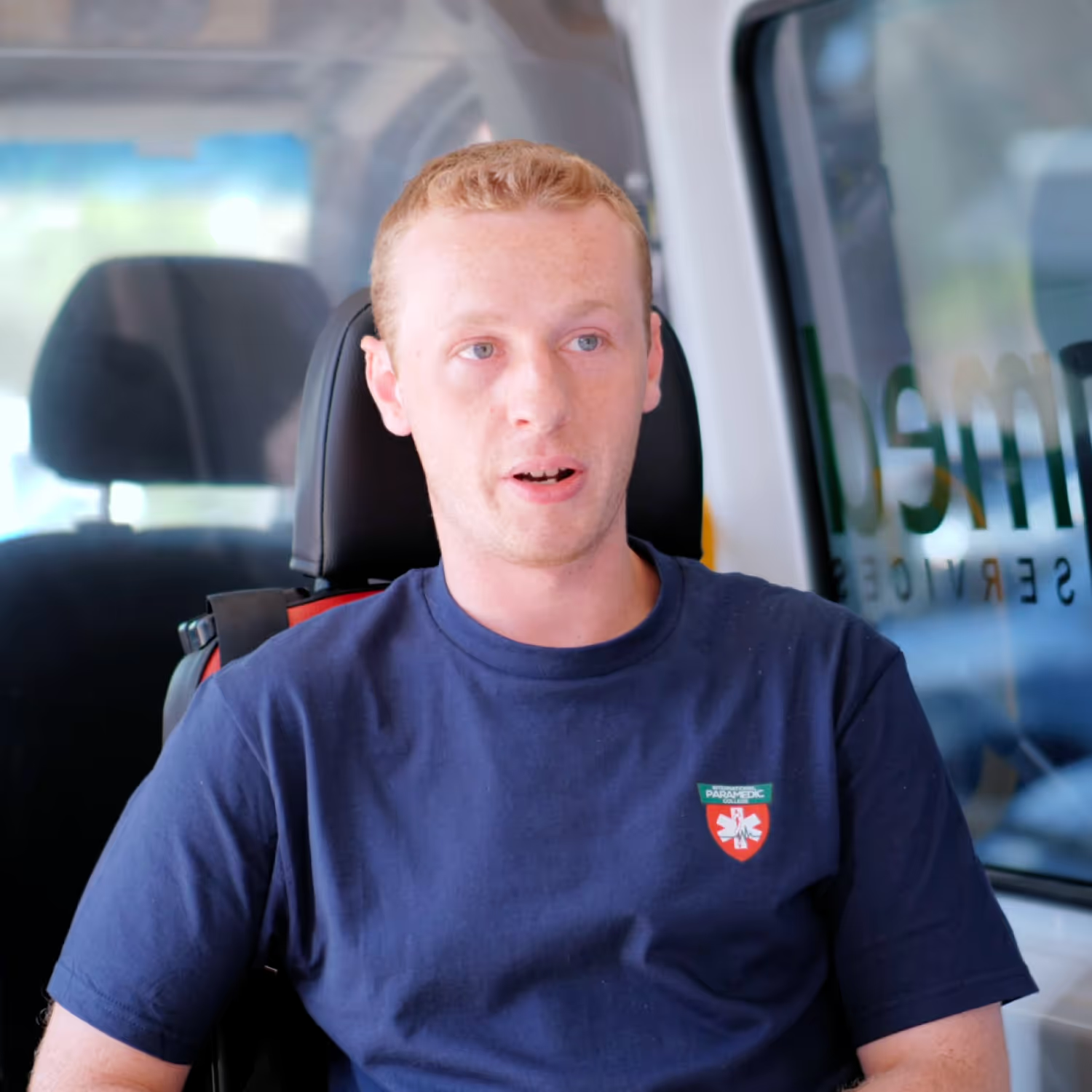
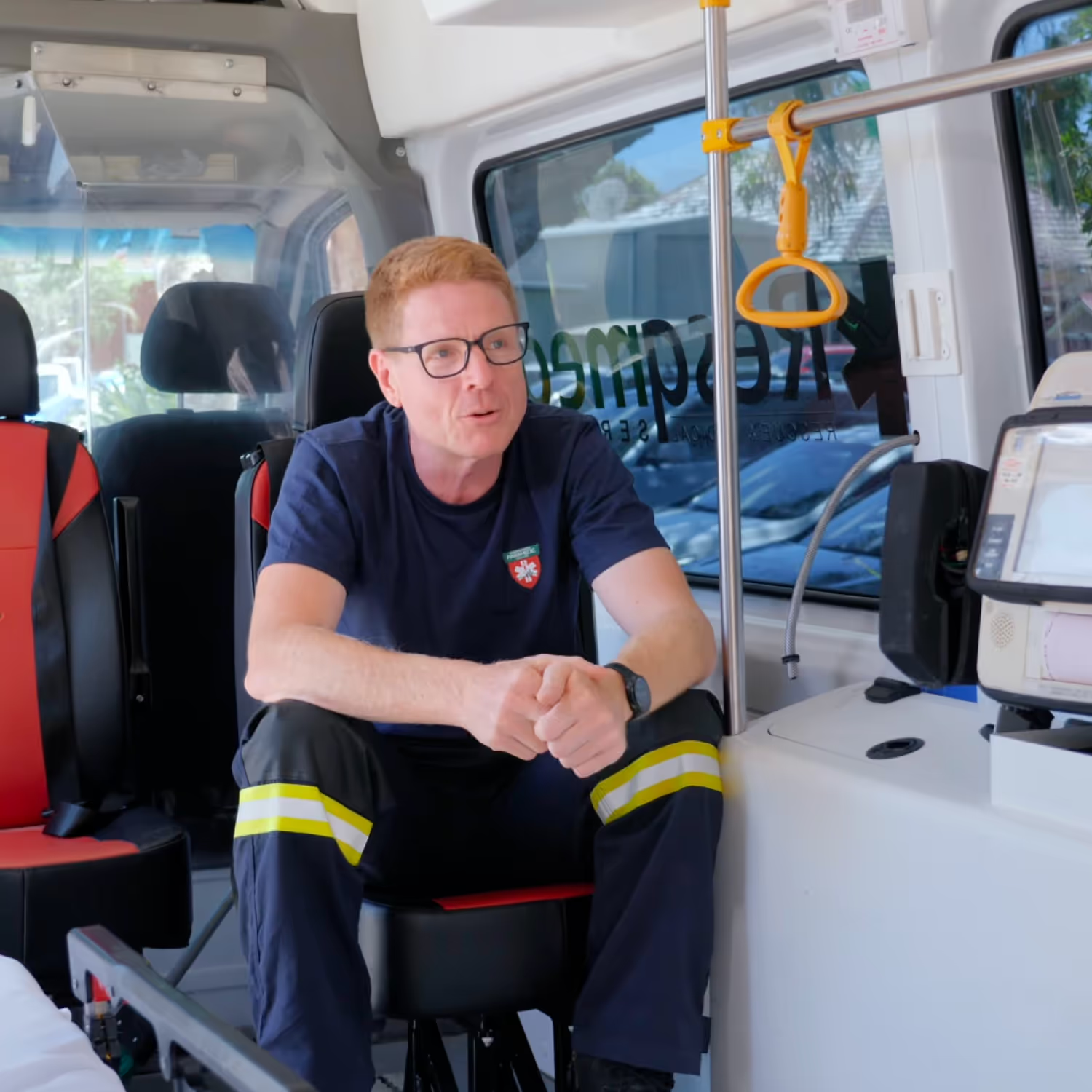
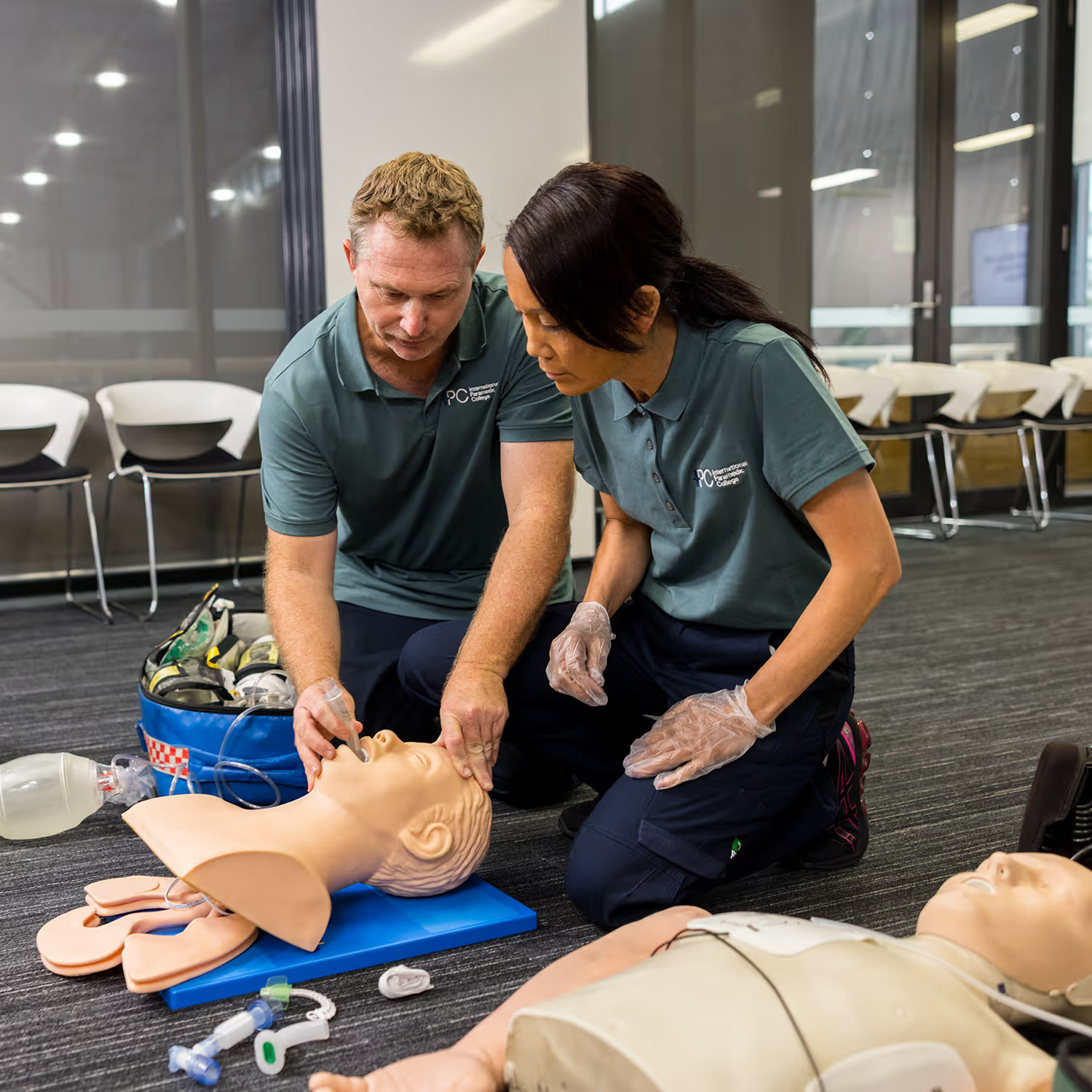
Hear from IPC graduates who’ve completed the HLT31220 Certificate III in Basic Health Care and taken their next step into urgent response, patient transport, and workplace medical roles.



How the HLT31220 Certificate III in Basic Health Care works
Start building practical healthcare skills through a simple, supported learning process designed for entry-level students.
Enrol and access your course
Choose your intake and get instant access to your online learning materials and course outline.
Study online at your own pace
Complete your theory units remotely, with structured modules that keep you on track without overwhelming you.
Complete required practical components
Complete the required practical training or provide recognised prior training for credit.
FAQs
If you’re unsure about how this course works or where it can lead, this section covers the key details from getting started and completing assessments to understanding your options after graduation.
Is this course fully online?
Yes. The learning content is delivered online, with practical assessment requirements clearly outlined.
Note: the first aid component requires a practical in-person.
Do I need previous health experience?
No prior experience is required to enrol in this course. It is designed as an entry-level qualification, making it suitable for individuals who are new to the health industry or considering a career in health or community services.
What are the entry requirements?
You’ll need reasonable English skills, basic computer access, and either a current First Aid certificate or a willingness to complete one locally. Some units (like pain management) may require additional items (e.g., a green whistle device).
Can I start a career as a paramedic with this qualification?
No — this qualification does not meet the requirements for paramedic registration with AHPRA. To become a registered paramedic in Australia, you must complete a relevant university degree. However, this certificate can help you explore emergency response roles or support further study pathways.
Can this course lead to further study?
Yes. This qualification supports progression into higher-level health and emergency courses, subject to entry requirements.
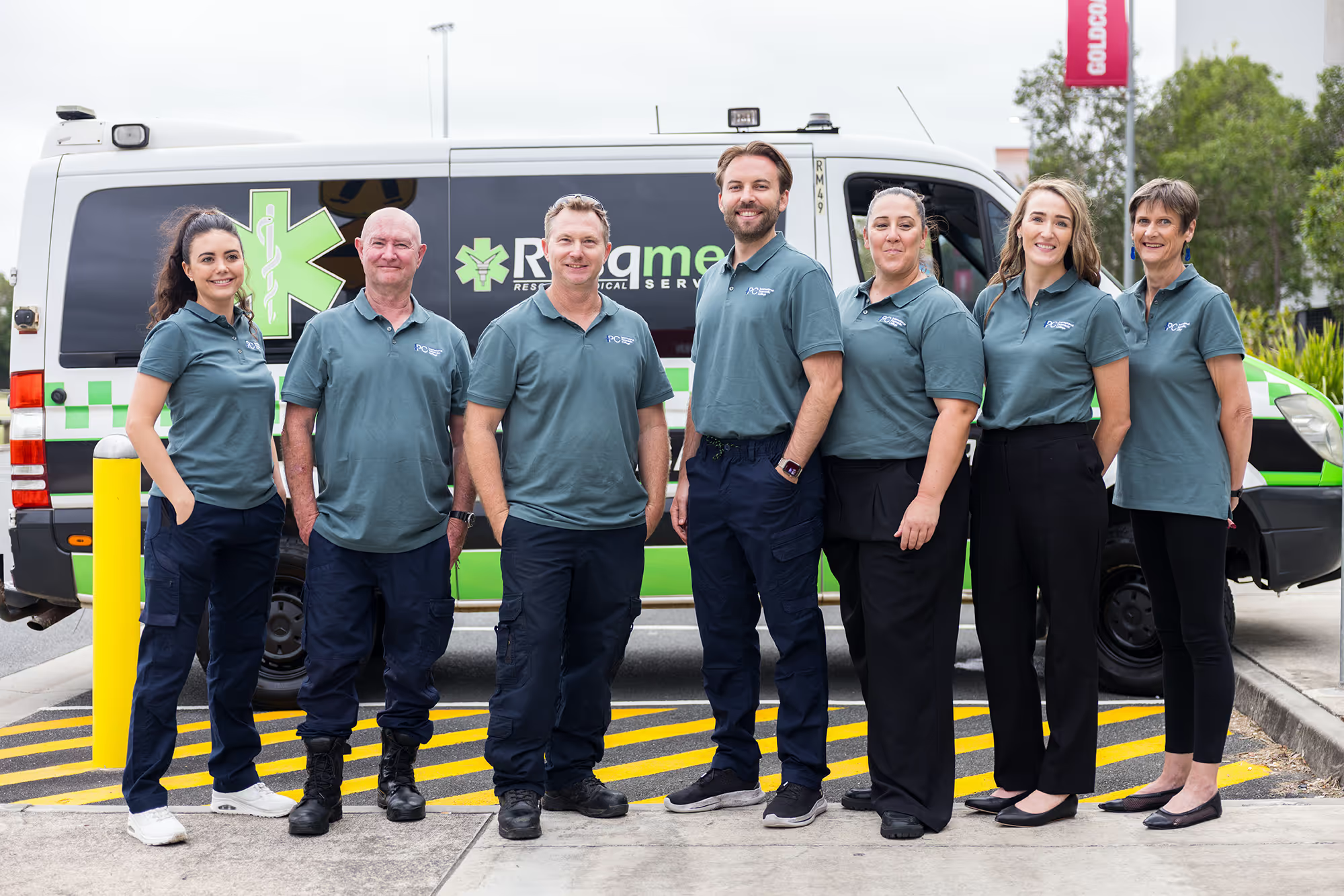
Start with practical healthcare skills
Train with experienced instructors who focus on the fundamentals of patient care. You’ll build the confidence to support others in real situations, with learning that’s simple, structured, and easy to follow.

Strong foundation for entry-level healthcare roles
Build the core skills needed to support patients, assist teams, and step into healthcare environments with confidence.
Flexible online study designed for beginners
Study at your own pace with structured modules that make learning accessible, even if you’re new to the industry.

Pathways into further training and roles
Use this qualification as a stepping stone into higher-level courses or roles across healthcare and community services.
Accredited training, real outcomes
Our courses are nationally recognised and delivered under strict compliance standards, so you can study with confidence and graduate with qualifications employers value.
Nationally recognised training (RTO)
Accredited delivery ensures your qualification meets national standards and is recognised across Australia.
Training package aligned
Our course aligns with the official training package, ensuring your skills meet the real-world requirements of emergency care.
Compliant, audited & quality assured
Our training and assessment is regularly reviewed to maintain quality, integrity and compliance.

Start your healthcare journey today
Take the first step into the healthcare industry with a course designed for beginners. Choose your intake and begin building practical, job-ready skills at your own pace.
Supported by trainers who understand beginners
Our trainers know what it’s like to start from scratch. You’ll be guided through each stage by experienced professionals who focus on building your confidence, not overwhelming you.

Susan Devlin
Susan Devlin is the CEO of IPC, bringing over 20 years of leadership experience across vocational education and RTO management. She is passionate about building accessible training pathways that help people step into health and emergency services.

Anna Lee
Anna brings over 13 years of experience in the VET sector, combining strong operational leadership with hands-on training delivery expertise. Passionate about quality education, Anna's focus is on achieving outstanding student outcomes while supporting trainers to succeed and deliver exceptional learning experiences.

Reahanna Clark
Reahanna Clark is IPC’s Course Advisor, supporting new and continuing students as they navigate their training and career pathways in emergency health care. With over five years of RTO experience and a background in health sciences, she provides helpful guidance on course selection, enrolment, credit transfers, and RPL applications, helping students feel confident throughout their study journey.

Caroline Gey
Caroline leads IPC’s audit and compliance activities, ensuring quality training outcomes, regulatory compliance, and robust systems that support students, trainers, and industry partners.

Lisa Bailey
Lisa Bailey is IPC’s Head of Product and WHS Officer, responsible for developing and refining learning resources across the organisation. She uses modern tools and technologies to create engaging and effective training experiences.

Allan Burnett
Allan Burnett is IPC’s Lead Trainer and Assessor and a former Intensive Care Paramedic with more than 20 years of frontline experience. He now shares his extensive clinical knowledge to mentor the next generation of emergency care professionals.

Dee Heffernan
Dee Heffernan is IPC’s Training and Professional Development Officer, working closely with partners to support training delivery and compliance. Drawing on her experience as a trainer and her paramedical studies, she helps partners stay informed, capable, and confident.

Cora O'Callaghan
Cora is IPC’s Training and Student Success Coordinator, supporting learners from enrolment through to course completion. Known for her solutions-focused style, she helps ensure students stay engaged, supported, and confident throughout their training journey.

Lynette Hawthorn
Lynette Hawthorn is a Training Coordinator at IPC, helping students navigate their courses and stay on track from start to finish. She is passionate about supporting learners as they develop the skills needed to make a difference in their communities.

Rebecca Wade
Rebecca Wade is a Trainer and Assessor with more than 30 years of experience across community and children’s services. Her career supporting vulnerable individuals shapes her practical, compassionate approach to first aid training.

Tony Ruttley
Tony Ruttley is a Trainer and Assessor with over 20 years of experience in sports medicine and emergency care. His background as a rugby league sports trainer brings valuable real-world insight into injury management and emergency response.

Harjot Singh Sandhu
Harjot Singh Sandhu is an experienced Trainer and Assessor with more than 13 years in disability, mental health, and community healthcare. His hands-on background helps him deliver engaging first aid training grounded in real-world scenarios.

Tamieka Huxley
Tamieka Huxley is a Trainer and Assessor delivering first aid training across the Northern NSW region. She is passionate about empowering local communities with the confidence and skills to respond effectively in emergencies.

Steve Tevelein
Steve Tevelein is a First Aid and CPR Trainer with extensive experience in emergency response and community service. As a long-time SES member, he brings practical knowledge into every training session.
Recognised training you can trust
Study with a licensed training provider delivering nationally recognised qualifications. IPC’s approvals and partnerships ensure your training meets industry expectations across Australia.


Start your healthcare journey with these guides
If you're new to the industry, these articles break down what to expect, how to get started, and where this qualification can take you next.


Get help starting your healthcare journey
If you’re exploring entry-level healthcare training, our team can guide you through enrolment, study options, and what to expect from this course.