


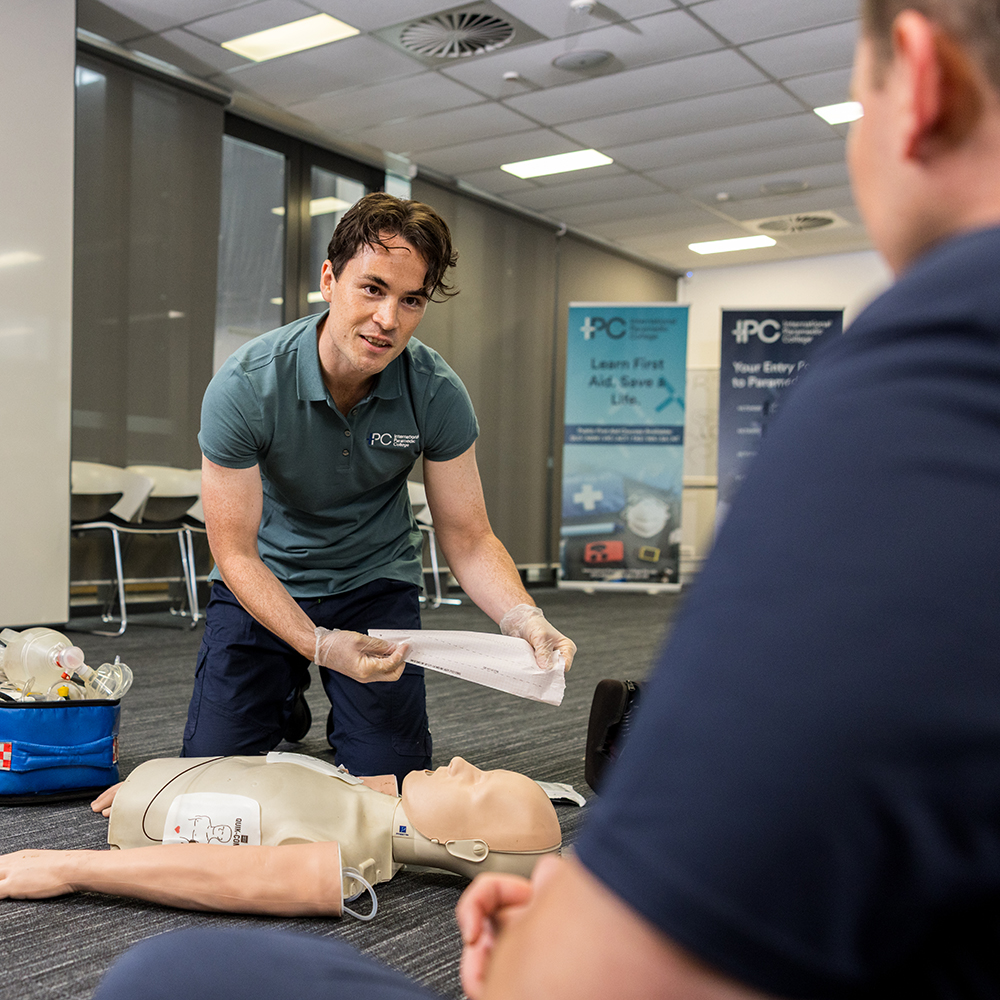
CPR certification lasts 12 months in Australia, which means you have to book a refresher at least once a year to stay compliant at work. What most people don’t realise is that their skills start fading long before the certificate does, so it might be a good idea to renew more often. This guide covers when to renew, why the yearly cycle exists, whether you can do it online, and what happens each time you renew.
How often do you need to renew your CPR certificate?
Every 12 months. Your HLTAID009 Provide Cardiopulmonary Resuscitation certificate stays valid for a year from the date you complete it, which is why most workplaces ask staff to rebook around the same time each year.
It isn’t written into legislation, though. Safe Work Australia recommends that first aiders refresh their CPR training annually. No law states a specific number, so it ultimately comes down to your employer or industry body to set what you need. That’s why high-risk sites often ask for refreshers more often than once a year.
People renewing HLTAID011 Provide First Aid follow a three-year renewal cycle, though the CPR unit within that qualification still expires annually.
Why CPR skills fade faster than the certificate
The 12-month certificate is a compliance cycle and not a measure of how long your skills actually last. ANZCOR Guideline 10.1 reports that CPR skills deteriorate within weeks to months of a standard single-session course, well before the one-year retraining interval most people follow.
That discrepancy between competence and certification is why ANZCOR asks training providers to build refresher plans into initial training instead of treating the annual booking as the full solution. The problem is that most workplaces don’t require refresher courses more often than once a year, so few people sign up for them.
What you can do is book your renewal before it expires to shorten the time between refreshers. You can also take any chance to practise on a manikin between courses. Talk to your employer about setting up recurring workplace drills to keep your skills up to date.
Can you renew your CPR certificate online?
Not entirely. No reputable provider will certify you fully online. ANZCOR Guideline 10.1 requires you to physically demonstrate CPR on a manikin before you can be assessed as competent, which rules out any course delivered purely through a screen. Providers advertising fully online CPR certification are selling you something your workplace won’t accept.
What you can do online is the theory. IPC delivers HLTAID009 as four to five hours of self-paced reading you complete at home, followed by a two-hour practical session where a trainer assesses you on adult and infant CPR plus AED use. That keeps the in-person commitment to a single short session while letting you work through the theory online whenever suits you.
How to renew your CPR certificate
Renewal works the same way as your first certificate, since you simply complete HLTAID009 again. These are the steps:
- Book before your certificate expires: Check the date on your statement of attainment and book a session ahead of it. IPC sends reminders before expiry so you have time to find a date that suits you.
- Complete the online theory: You’ll get access once you book, then work through four to five hours of reading at your own pace.
- Attend your practical session: Bring photo ID. Your trainer assesses you on two minutes of adult CPR, two minutes of infant CPR, and safe use of an AED.
- Receive your statement of attainment: IPC issues it electronically once you’ve passed the assessment and paid. It will be valid for another 12 months.
How much does CPR renewal cost?
HLTAID009 starts at $60 with IPC, though the exact fee varies by location. That covers your online learning materials, the practical session, use of the manikins and AED training equipment, and your statement of attainment issued electronically.
That price also includes a $35 non-refundable administration fee. Employers booking on invoice must pay a $45 administration fee instead, so the total cost rises to $70. Changing your session within five business days can attract a rebooking fee, and missing your practical without notice may mean having to pay to re-enrol.
CPR renewal vs. first aid renewal
The two certificates expire on different cycles, which can catch people off guard. HLTAID009 covers CPR alone and lasts 12 months. HLTAID011 Provide First Aid covers CPR plus bleeding, burns, fractures and medical emergencies and stays valid for three years. Anyone with the full first aid certificate still needs to redo the CPR component each year, so you’ll book HLTAID009 twice before your first aid certificate is up for renewal.
Book your CPR renewal with IPC
Anyone whose certificate is close to expiring can book HLTAID009 Provide Cardiopulmonary Resuscitation with International Paramedic College, then complete the theory online before attending a two-hour practical session at a venue near you. If you need broader coverage than CPR alone, HLTAID011 Provide First Aid includes the same CPR unit along with wider first aid skills. Talk to a course adviser if you’re unsure which one your workplace requires.
FAQs
How often does a CPR certificate need to be renewed in Australia?
Every 12 months. Safe Work Australia recommends a yearly CPR refresher, though your employer or industry body could set different standards.
What happens if my CPR certificate has already expired?
You book HLTAID009 again, same as anyone renewing on time. Letting it lapse carries no penalty, though you’ll be uncertified until you complete the course.
Can I do a CPR renewal course online?
Only the theory component. Every nationally recognised CPR certificate requires you to demonstrate compressions on a manikin in person.
How long does CPR renewal take?
First you must complete four to five hours of online theory at your own pace. Then you’ll attend for an in-person, two-hour practical session with a trainer.
This guide covers CPR training and certification in general rather than personal or clinical advice. Renewal intervals are set by your employer or industry body.
Table of contents