


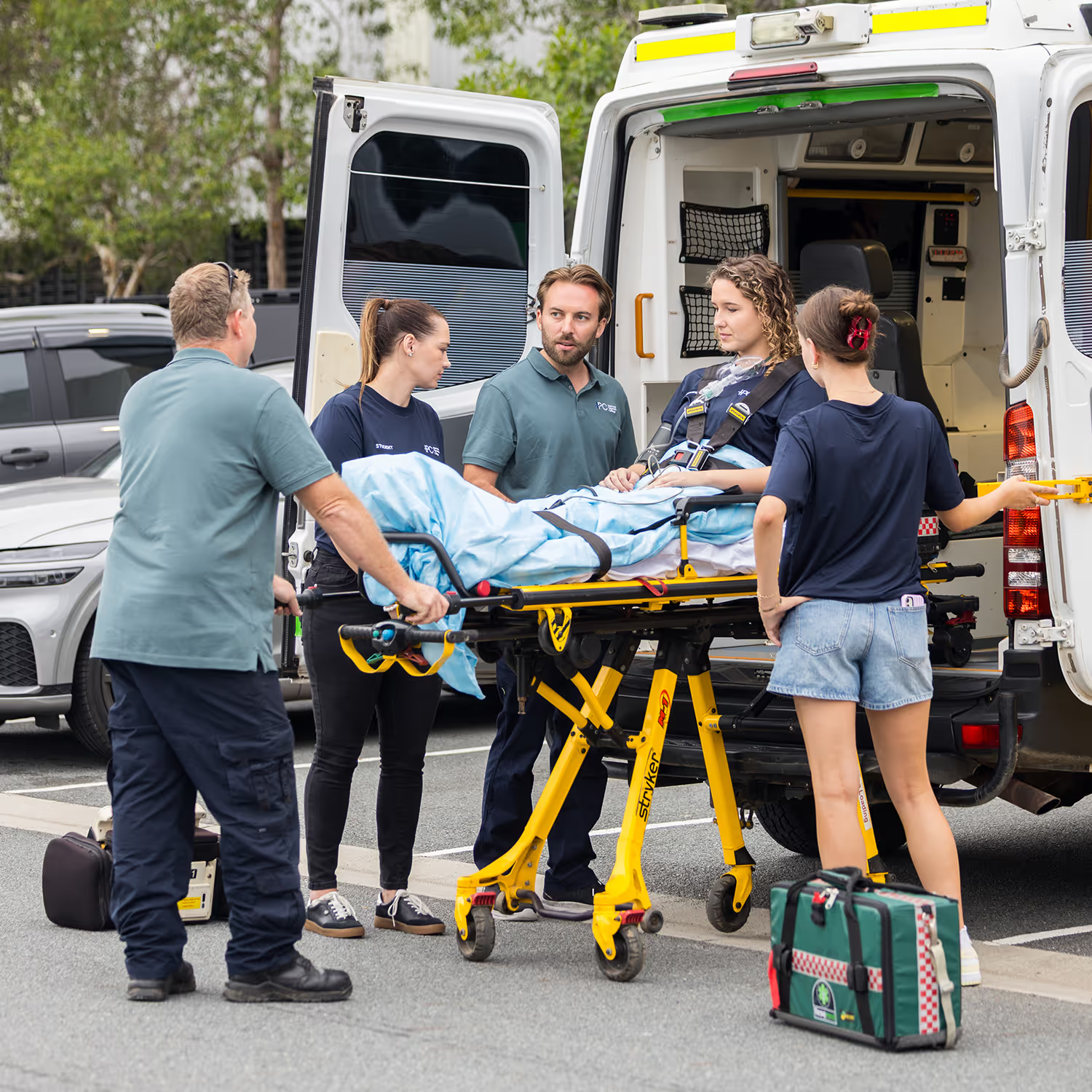
Patient transport officers move non-emergency patients between hospitals, aged care homes and clinics. To become a patient transport officer in Australia, you’ll need to complete a HLT31120 Certificate III in Non-Emergency Patient Transport and obtain a few clearances. This guide covers what the job involves, which qualifications employers look for, and how long the entire process takes.
What does a patient transport officer do?
Patient transport officers move people between healthcare facilities when an ambulance isn’t necessary. Jobs and Skills Australia describes the work as five main tasks:
- Transporting non-emergency patients to and from healthcare facilities
- Moving equipment and materials, including wheelchairs and stretchers
- Providing basic care to patients during transport
- Keeping accurate patient transport records
- Working with patients, families, health professionals and emergency services
Patient transport officers spend most shifts driving between hospitals, aged care homes and clinics, carrying patients to dialysis or oncology appointments they can’t get to any other way. You’ll lift, load and secure people onto stretchers, monitor them on the way, and spend a fair bit of the day talking to someone who might be nervous about where they’re headed.
How to become a patient transport officer
You’ll need to complete a nationally recognised qualification, sort out your licence and clearances, then apply. The whole process takes most people between eight and 24 months, depending on how fast they get through the patient transport officer course.
1. Complete HLT31120 Certificate III in Non-Emergency Patient Transport
This is the qualification employers ask for. It teaches you how to:
- Assess and monitor patients, then respond when their condition changes
- Prevent and control infection
- Lift and move people without injuring them or yourself
- Load, secure and transport someone safely in a vehicle
- Give first aid, advanced resuscitation and oxygen therapy
- Talk to patients and health professionals in difficult situations
You’ll complete 13 units in total. Eight online, covering things like medical terminology and safe work practices, and the other five in person.
2. Attend your practical workshops
Five of the HLT31120 Certificate III in Non-Emergency Patient Transport’s units can only be completed face to face, including first aid, advanced first aid, safe access and egress, and transporting patients under operational conditions. IPC delivers these workshops in NSW, QLD, VIC, WA, and SA.
You’ll practise on real stretchers and equipment, and you’ll need to perform two minutes of uninterrupted CPR on a manikin as part of the first aid assessment.
3. Get your licence and clearances
You need a valid Australian driver’s licence to complete the transport assessments. Employers will require one too, so it’s a good idea to sort it out before you enrol in the course.
Depending on where you study and work, you may also need a police check, a working with children check and up-to-date immunisations. Sort these out early, since they take some time to come through and placement providers won’t accept you without them.
4. Apply for patient transport roles
Private patient transport operators hire the most people for this role. State health services employ patient transport staff directly as well, including NSW Ambulance and NSW Health. Entry requirements vary between them, so check what your target employer asks for before you apply.
Expect shift work either way. Patients need transport early in the morning and late at night, so you’ll be working night and weekend rosters consistently.
5. Progress your career
Working in patient transport gives you real experience in the industry. You’ll have handled patients, worked shifts and answered to a supervisor, which counts for more on an application than a certificate on its own. Once you’re ready for more responsibility or roles with a higher scope, you can pursue these qualifications:
- HLT41120 Certificate IV in Health Care: This is the level most employers ask for in event medical work, on mine sites and in industrial response teams. It builds on what you already know with deeper clinical reasoning and more complex patient assessment so you can make calls on your own instead of following a set procedure.
- HLT51020 Diploma of Emergency Health Care: The Diploma carries the widest clinical scope IPC delivers, covering emergency response, trauma management and decision-making under pressure. Plenty of people complete it before applying to university for paramedicine, since it gives you clinical grounding most first-year students don’t have.
How long does it take to become a patient transport officer?
It takes between eight and 24 months to become a patient transport officer. IPC delivers the patient transport officer course partly online and self-paced, so students can move through most of it as quickly as they’d like. Those fitting study around full-time or part-time work will take longer to complete it.
The HLT31120 course includes five units you’ll have to complete in person. Those depend on workshop availability in your state, so check the schedule early and book around it.
You should also add a few weeks for your police check and immunisations if you don’t already have them. You’ll have to wait on those no matter how fast you finish the course, so get them done early.
Start your patient transport training with IPC
HLT31120 Certificate III in Non-Emergency Patient Transport is the qualification that gets you into this work. You study the theory online at your own pace, then attend practical workshops in NSW, QLD, VIC, WA or SA to finish the hands-on units. Talk to a course adviser if you have any questions about the program.
FAQs
What qualification do you need to be a patient transport officer?
You need to complete an HLT31120 Certificate III in Non-Emergency Patient Transport. It’s the nationally recognised qualification employers ask for and includes the transport-specific units a general health certificate doesn’t cover.
Do you need a driver’s licence to be a patient transport officer?
Yes. You need a valid Australian licence to complete the transport assessments in the course.
Can you do the patient transport officer course online?
Partly. Eight of the 13 units are online, though the other five units require a face-to-face workshop where a trainer assesses you.
Is patient transport officer the same as a paramedic?
No. The paramedic pathway requires a university degree and registration with the Paramedicine Board of Australia. Many start as patient transport officers so they can work while they complete the Bachelor of Paramedicine.
Table of contents