


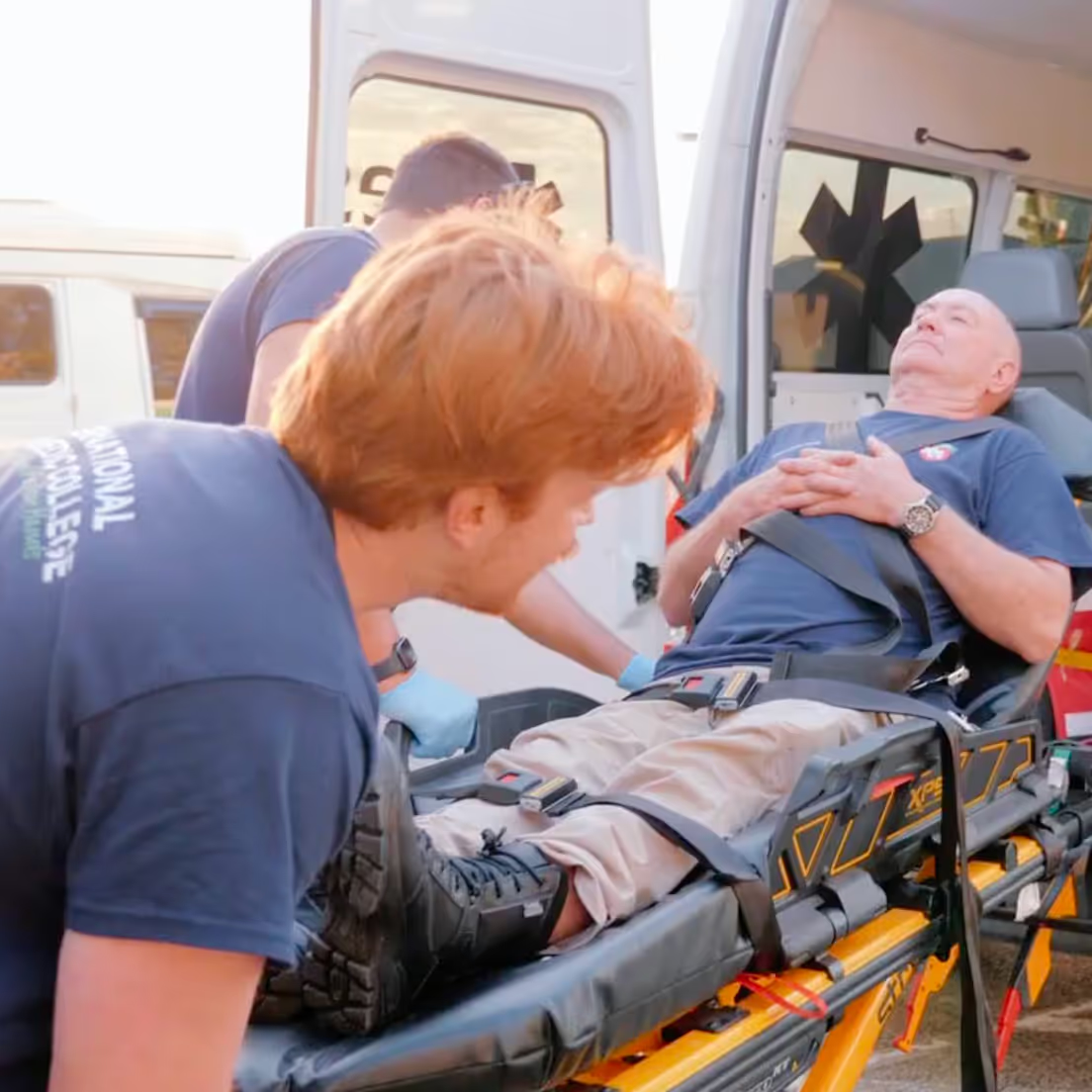
‘First Aid Officer’ and ‘First Responder’ get used interchangeably online, though they’re very different things. A first aid officer holds a workplace safety role with one defined training requirement. First responder has no legal definition in Australia and covers two separate kinds of work. Here’s how to become either.
What is a first aid officer?
A first aid officer or first aid responder is the person at your workplace trained to handle injuries and medical emergencies until an ambulance arrives. Australian workplaces are required to provide first aid training, usually with a first aid officer on-site, along with the appropriate first aid equipment relevant to that workplace.
The role normally goes to someone already on staff. A warehouse supervisor or an office manager can take on the responsibility on top of their regular job. All they need to do is complete the training necessary and help people at work when they get hurt. Some larger workplaces employ dedicated first aid officers, though this is an exception.
What is a first responder?
First responder has no legal definition in Australia. Nobody registers you as one and there’s no single qualification to become one, so the term generally covers two kinds of work that don’t have a lot in common:
Private sector first responder roles
They deliver immediate clinical care at workplaces and events where waiting for an ambulance would take too much time. Event medical companies staffing festivals and sporting fixtures, patient transport operators, mine sites and resource companies all employ on-site medical teams. They do clinical work on rostered hours, and you might find that many employers advertise these jobs as an EMT or site medic.
Community first responder programs
Community first responders live in regional areas and get dispatched to emergencies near them while the ambulance is on its way. They stabilise the patient as best as they can and hand over when the crew arrives. For example, Ambulance Victoria trains Ambulance Community Officers and Community Emergency Response Teams. NSW Ambulance operates its own version. You do this where you live, on call for a set number of hours each month instead of working rostered shifts. Yes, you are employed as a volunteer for these relative state services, and you often have periodic training with them.
What's the difference between a first responder and a first aid officer?
A first aid officer is a workplace safety role, while a first responder does clinical work as a job. This is how they compare:
Is it a job?
- First aid officer: No, it's a responsibility added to your existing job
- First responder: Yes, in the private sector. Community programs have roster commitments.
What training do you need?
- First aid officer: HLTAID011 Provide First Aid
- First responder: Certificate II, III or IV, depending on the role
Where do you work?
- First aid officer: Your own workplace
- First responder: Events, mine sites, patient transport, or your own town
Is the title regulated?
- First aid officer: Defined under work health and safety codes
- First responder: No legal definition at all
How to become a first aid officer
You need one nationally recognised unit and to work for an employer who needs a first aid officer. You can become one by:
- Checking what your workplace needs: Safe Work Australia recommends one first aider per 50 workers in low-risk settings, one per 25 in high-risk settings, and one per 10 in remote high-risk workplaces.
- Completing HLTAID011 Provide First Aid: IPC delivers it as online theory plus one face-to-face practical session. Higher-risk workplaces may require the HLTAID014 Provide Advanced First Aid instead.
- Getting your statement of attainment: It has to come from a registered training organisation, so a generic first aid course won’t satisfy your employer’s obligation.
- Renewing on time: First aid certification lasts three years, though the CPR component needs to be renewed once a year. This is important to remember to maintain compliance.
How to become a first responder
Which qualification you need depends on which kind of first responder you want to be. For private sector work:
- Choose your level: Certificate III in Non-Emergency Patient Transport teaches you how to move stable patients between hospitals and aged care facilities. A Certificate IV in Health Care also covers event medical and site medic roles.
- Complete the qualification: Both take between eight and 24 months, self-paced online with practical workshops.
- Apply under every title: Employers advertise the same work as first responder, EMT medic, and emergency services officer.
For community programs:
- Contact your state ambulance service: Ambulance Victoria and NSW Ambulance both recruit directly.
- Complete a Certificate II in Medical Service First Response: Ambulance Victoria trains you through it, covering driver training, workshops and supervised practice.
- Commit to the roster: Ambulance Victoria asks for at least 20 hours a month once you’re trained.
First aid officer salary in Australia
There usually isn’t one. First aid officer is a responsibility added to a job you already have, so most people who hold it earn an allowance on top of their existing wage. The Clerks Private Sector Award pays $16.79 a week for it, or roughly $873 a year. Construction awards generally pay a daily rate instead.
Schools are the exception. They advertise dedicated first aid officer positions with salaries ranging from $57,000 and $75,000 a year.
First responder salary in Australia
Indeed reports an average of $64,570 a year, or $32.95 an hour. Glassdoor puts base pay at $35 an hour, with a wider range of $29 to $36 an hour. Both figures come from self-reported data, with 19 salary profiles across the two sites.
Both numbers describe event medical and patient transport work. Keep in mind that emergency services officer roles on mine sites and resource projects advertise well above this to account for the remote nature of the job.
Start your first aid training with IPC
Most people reading this will need the HLTAID001 Provide First Aid to become their workplace’s first aid officer. If you’re after the first responder job instead, then the Certificate II in Medical Service First Response or the Certificate IV in Health Care would be better options. Talk to a course adviser to see which path is right for you.
FAQs
Are workplaces required to have a first aid officer?
Yes, they have to provide first aid, and most meet that by training staff as first aid officers. Safe Work Australia recommends one per 50 workers in low-risk settings.
Can anyone become a first aid officer?
Yes. You just need HLTAID011 Provide First Aid from a registered training organisation and an employer willing to appoint you to the role.
This guide covers training pathways in general rather than personal career advice. No course guarantees placement in a paid role or a state ambulance service's volunteer program.
Table of contents