


DRSABCD is the action plan every accredited first aid course in Australia teaches. It has seven steps, starting with checking for danger and ending with the application of a defibrillator. This guide breaks down what each letter means, then walks you through how to perform chest compressions properly on an adult, child or baby.
Call 000 immediately in a real emergency. This is general information and doesn’t replace hands-on training.
What does DRSABCD stand for?
DRSABCD stands for Danger, Response, Send for help, Airway, Breathing, CPR, Defibrillation. It’s the seven-step acronym ANZCOR publishes for anyone responding to a collapsed person in Australia.
You’re supposed to work through it in order:
- Danger: Check for anything that could hurt you or anyone else. Look out for traffic, live wires, fire, or deep water.
- Response: Squeeze their shoulders and ask their name. If they respond, they don’t need CPR.
- Send for help: Call 000 immediately or point at someone and tell them to call. Don’t leave the person alone to do it.
- Airway: Open their mouth and look for anything blocking their airway. Tilt the head back and lift the chin.
- Breathing/Bleeding: Look for chest movement and listen. Occasional gasps aren’t normal breathing, so that signals it’s time for CPR. Don’t check for a pulse. ANZCOR says feeling for one is unreliable even for trained rescuers. You also arrest life threatening bleeding/haemorrhage here, before you start compressions.
- CPR: Give 30 chest compressions, then two breaths, and keep going.
- Defibrillation: Attach an AED as soon as possible and follow the voice prompts.
Seven steps are a lot to remember when someone is on the floor in front of you, which is why plenty of workplaces and classrooms keep a printed DRSABCD and AED wall chart next to the defibrillator.
How to perform chest compressions
Lay the person flat on their back on a firm surface. Kneel beside them, put the heel of one hand on the centre of their chest over the lower half of the breastbone, then stack your other hand on top and interlock your fingers.
Push down using your body weight and follow ANZCOR’s three numbers:
- Depth: approximately one third of the chest, which works out to more than 5cm in an adult.
- Rate: 100 to 120 compressions a minute, or close to two a second.
- Ratio: 30 compressions followed by two breaths, then straight back to compressions.
Let the chest come all the way back up between compressions without taking your hands off. If you push too high or too low on the breastbone, you’ll risk damaging the organs underneath. Remember that coming back up all the way (recoiling) between each compression is just as important, because that is the part of the compressions when the heart gets it’s oxygenated blood.
If you’re worried about pushing too hard, don’t be. ANZCOR sets no upper depth limit because nobody can judge centimetres while resuscitating someone and pushing too shallow puts the person at greater risk than pushing too deep. You may break a rib, but someone with a broken rib and a heartbeat is in far better shape than someone without either.
Do you have to give rescue breaths?
No. ANZCOR asks every rescuer to perform chest compressions on anyone unresponsive and not breathing normally. Rescue breaths get a weaker recommendation, aimed at rescuers who are both trained and willing to give them.
Compressions alone are what ANZCOR asks of everyone. If you don’t know how to give breaths or don’t want to on a stranger, push on the chest and don’t stop until help arrives.
Children are the only exception. ANZCOR notes that most cardiac arrests in babies and children start with a breathing problem, so breaths matter more. Give them if you can, and remember if you have to cover the baby’s mouth and nose to make it effective with your mouth, do it!
It is however important to recognise that compressions with breaths are far more ideal for the person in cardiac arrest, than just compressions, but you do not have to if you do not want to.
CPR for children and babies
DRSABCD applies at every age with the same 30:2 ratio and the same 100 to 120 rate. The two things that change are how much of your hand you use and how deep you go:
- Children over one: Place the heel of one hand on the lower half of the breastbone. Switch to two hands if one isn’t getting you to about 5cm.
- Babies under one: Use two fingers on the lower half of the breastbone, compressing to about 4cm.
Defibrillators work on children and babies too. Paediatric pads suit anyone under eight, though ANZCOR is clear that where those aren’t available, using standard adult pads is reasonable. Keep the pads from touching each other. If the child’s chest is too small, put one on the front and one on the upper back between the shoulder blades, and no, it does not matter which pad from the front goes onto the back.
Why reading this isn't the same as being trained
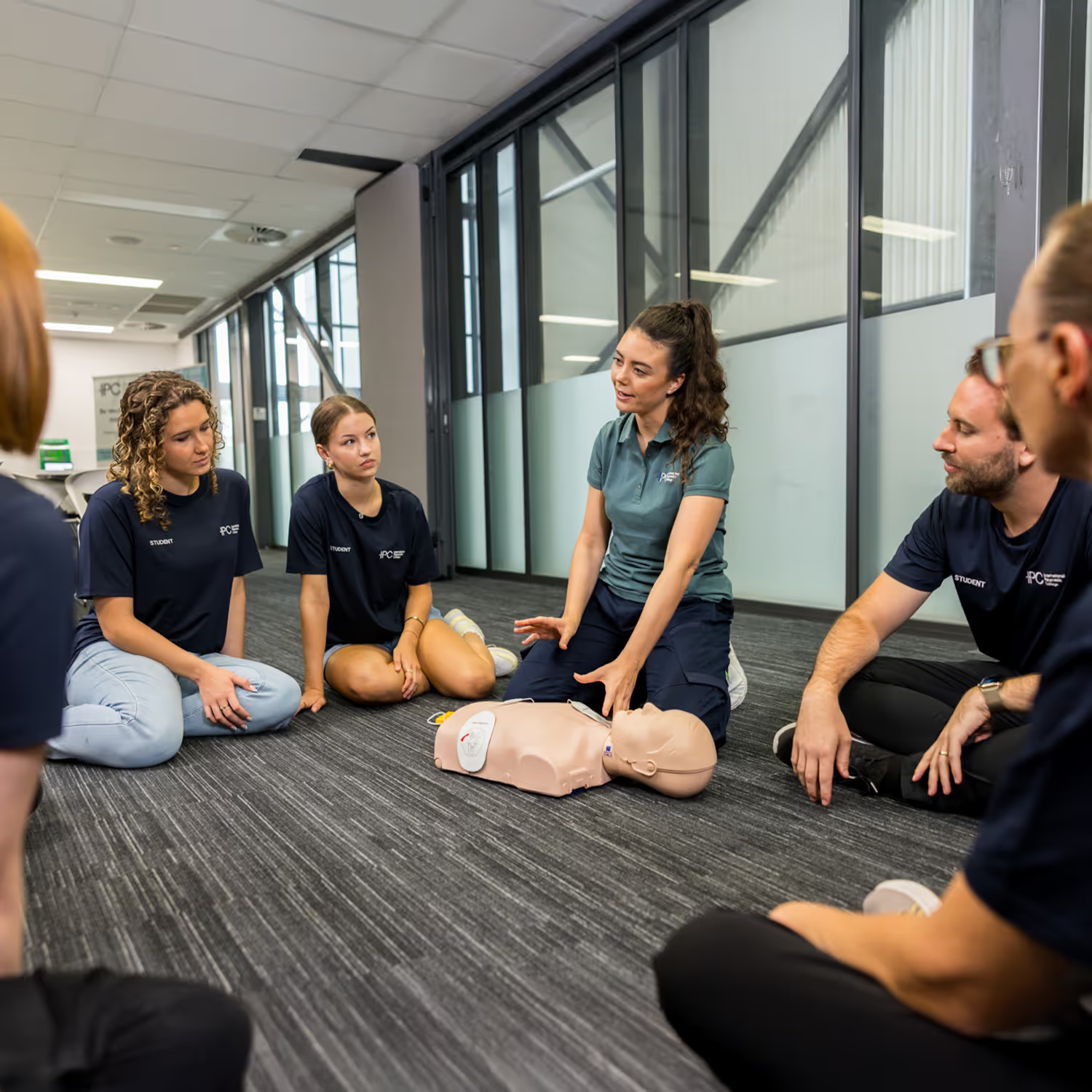
Compression depth is where most people go wrong on their own. Pushing 5cm into someone’s chest feels alarmingly deep the first time, so plenty of people stop short without realising it. A trainer watching you at a workshop can teach you how to compress properly.
HLTAID009 Provide Cardiopulmonary Resuscitation is the unit that covers this. It’s the nationally recognised unit in Australia that workplaces ask for when they need someone with a current CPR certificate. You’ll cover the theory online, then attend a short practical session where a trainer assesses your compressions on a manikin and signs you off. Certification lasts 12 months from the date you complete it, so you’ll have to book a CPR refresher every year to stay current.
FAQs
What are the 7 steps of CPR?
DRSABCD stands for Danger, Response, Send for help, Airway, Breathing, CPR, Defibrillation.
What’s the correct compression rate and depth?
Between 100 and 120 compressions a minute, pressing down about one third of the chest. That works out to more than 5cm in adults, about 5cm in children and 4cm in babies.
Can I do CPR without giving rescue breaths?
Yes. ANZCOR asks every rescuer to give compressions, while rescue breaths are for those trained and willing to give them. Just remember, it is preferred to have breaths and compressions.
Can you do CPR on a baby?
Yes, you can safely perform CPR on a baby with a few modifications. Use two fingers instead of your hand, placed on the lower half of the baby’s breastbone, compressing about 4cm deep at 100 to 120 a minute with the same 30:2 ratio.
This guide is general information rather than medical advice or a substitute for hands-on training. Call 000 immediately in a real emergency.
Table of contents