Choking is treated with back blows and chest thrusts in Australia. You give up to five of each and keep alternating between them until the object comes out or professional help gets there. Call 000 as soon as you can see the person isn’t clearing it with their own coughing. Refrain from doing the Heimlich maneuver, which ANZCOR doesn’t recommend at any age. Below are the full steps for what to do when adults and children are choking.
The information below is general and isn’t medical advice. Call 000 in any emergency.
How to tell if someone is choking
The clearest sign someone is choking is when they suddenly can’t speak or breathe properly, often while clutching at their throat. Watch for any of these signs from healthdirect:
- Trouble speaking or breathing
- A whistling noise when breathing
- Blue lips or face
- Agitation or panic
- Loss of consciousness
Once you identify these signs, listen to how they’re coughing. A strong cough means their airway is only partly blocked, so encourage them to keep coughing and stay with them. If they can’t cough or their cough sounds weak and silent, the blockage is more serious and you’ll need to act straight away.
Choking first aid for adults and children over 1
For anyone older than 12 months, ANZCOR recommends alternating back blows and chest thrusts until the blockage clears. Follow these steps:
- Let them cough first: Someone who can cough forcefully may clear the object on their own. Keep reassuring them while they try.
- Call 000: Call an ambulance as soon as the coughing fails or if the person can’t cough effectively. If someone else is nearby, send them to make the call while you start helping.
- Give up to 5 back blows: Lean the person forward and strike firmly between their shoulder blades with the heel of your hand. Check after each blow whether the object has come out.
- Switch to chest thrusts: If back blows don’t work, give up to 5 thrusts with the heel of your hand on the lower half of the breastbone. Each thrust should be sharper and slower than a CPR compression.
- Repeat until help arrives: Keep alternating between back blows and chest thrusts until the object comes out or paramedics take over.
You won’t use abdominal thrusts here, which many people know as the Heimlich maneuver. ANZCOR doesn’t recommend them at any stage, since studies have linked them to life-threatening complications.
Choking first aid for babies under 1
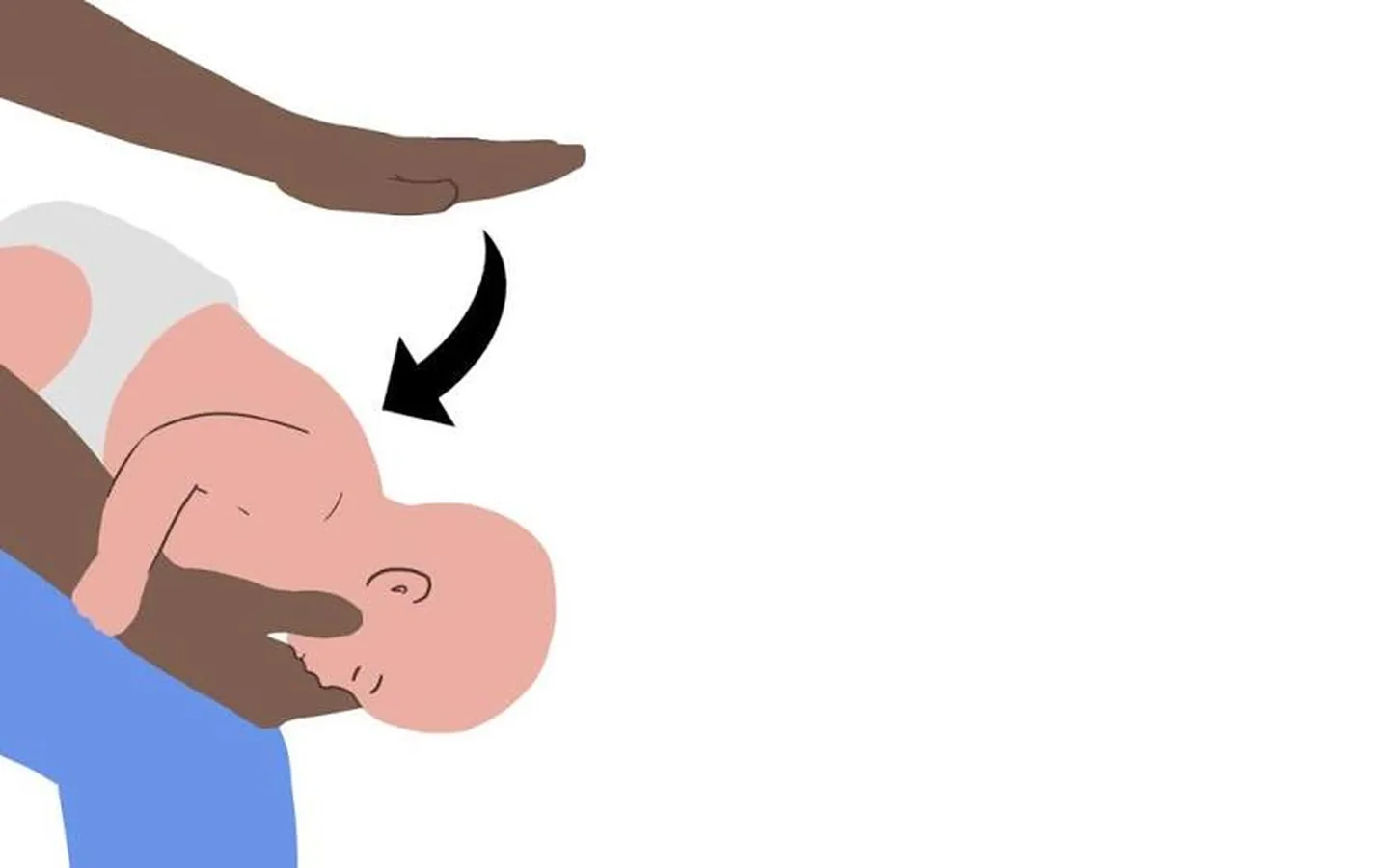
If a baby under 12 months is choking, you’ll still alternate back blows and chest thrusts. The difference is how you hold them, since ANZCOR recommends placing the baby head-down across your lap or thigh first. Do this if a baby under one year old is choking:
- Check their cough: A baby who can cough or cry strongly may clear the blockage without help. Call 000 straight away if their cough is weak or silent.
- Position the baby face-down: Lay the baby across your lap so their head is lower than their chest.
- Deliver up to 5 back blows: Use the heel of your hand between their shoulder blades. Look for the object after every blow and stop once it’s out.
- Turn them onto their back: Rest the baby face-up across your thigh with their head still lower than their body. Give up to 5 chest thrusts on the same spot you’d use for CPR compressions, making each one sharper and slower than a compression.
- Alternate until help arrives: Switch back and forth between the two until the blockage clears or an ambulance crew takes over.
Never use abdominal thrusts on a baby, even if back blows and chest thrusts aren’t working. If you look after young children at home or at work, IPC’s HLTAID012 Provide First Aid in an Education and Care Setting course lets you practise these steps on an infant manikin.
When to start CPR
Stop the back blows and chest thrusts and start CPR as soon as a choking person becomes unresponsive. Begin with chest compressions, which healthdirect recommends for people of any age in this situation. At this point, someone should have called 000 already, so make sure an ambulance is on its way while you keep going, and follow our guide on what to do while you wait for an ambulance.
Each age group needs a slightly different technique, so follow the DRSABCD steps that match the person you’re helping. If you run a childcare centre or a sporting club, you can download IPC’s free DRSABCD wall chart to display next to your defibrillator.
How to prevent choking in babies and toddlers
You can lower a young child’s risk of choking by preparing their food carefully and keeping small objects out of reach. According to Better Health Channel, children don’t have enough molars to chew properly until around three or four years of age. Until then, follow these tips:
- Grate or cook hard foods like raw carrot and apple
- Cut meat into small pieces and peel the skin off sausages
- Slice food lengthwise so each piece is narrower
- Avoid popcorn and peanuts
- Make sure children sit down to eat while you supervise them
- Keep anything smaller than a ping-pong ball out of reach, including coins and buttons
- Store balloons away from small children, since a bitten balloon can burst into pieces they might inhale
Practise choking first aid before you need it
You’ll respond more confidently to a choking emergency if you’ve already practised back blows and chest thrusts with a trainer. The written steps above are simple enough, but only reading about them can’t show you how much force to use or how to hold a baby safely.
Book a place in IPC’s HLTAID011 Provide First Aid course to practise choking management with a trainer, including CPR on adult and infant manikins. It’s also worth checking your first aid kit has a resuscitation face shield in case you need to give rescue breaths.
This guide is general information only and doesn’t replace hands-on training or medical advice. In an emergency, call 000.
FAQs
Does Australia use the Heimlich maneuver?
No. ANZCOR recommends back blows and chest thrusts instead.
What do you do if a baby is choking?
Call 000, then give back blows with the baby face-down across your lap.
What if a choking person becomes unconscious?
Start CPR immediately, beginning with chest compressions. Stop the back blows and chest thrusts at that point, then keep compressions going until an ambulance crew arrives.
Table of contents