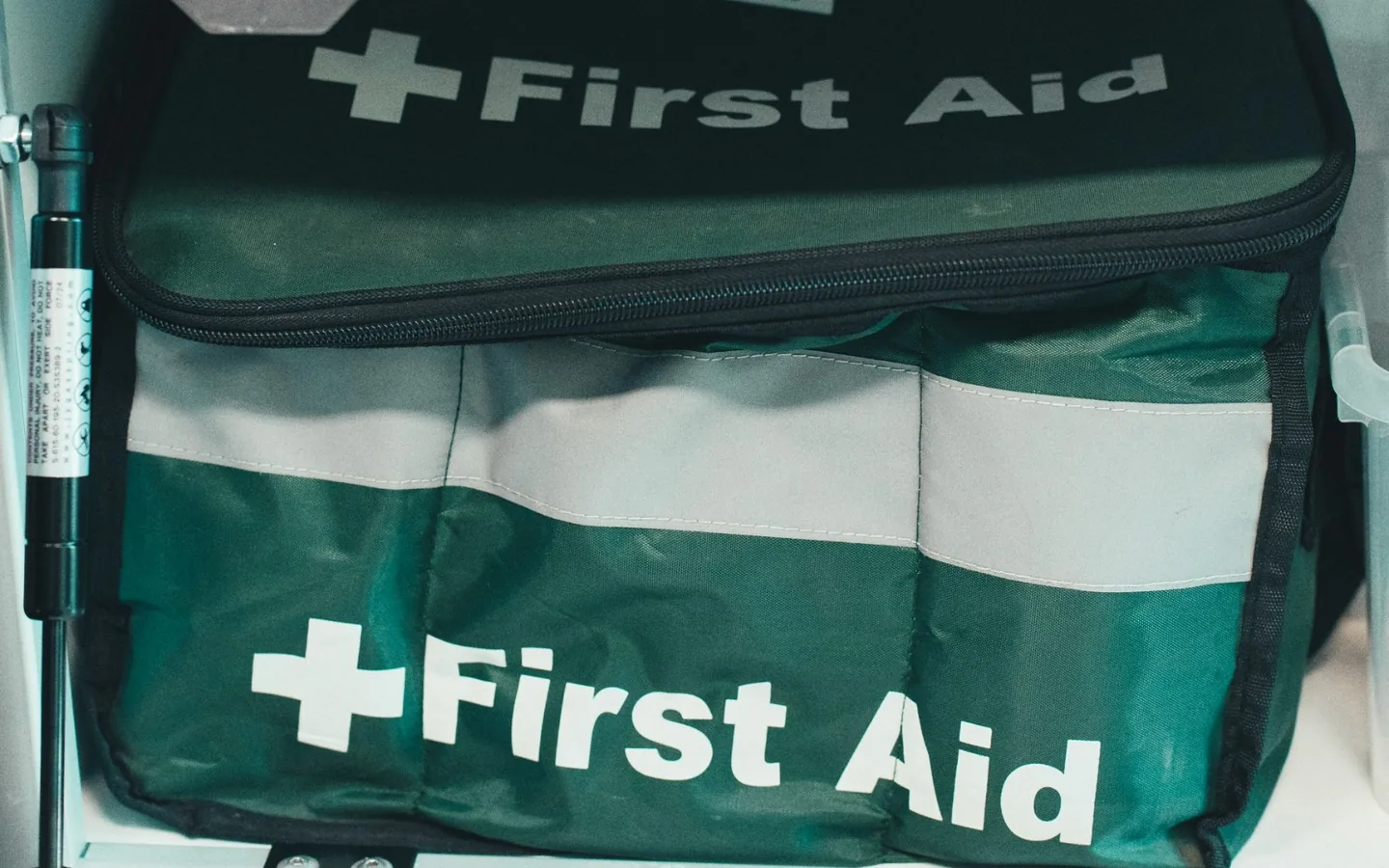
A good first aid kit covers the injuries you’re most likely to deal with wherever you keep it. That’s why the first aid box in your kitchen won’t have quite the same things as the kit in your car. Workplace kits in Australia go a step further, since employers have to follow a code of practice when deciding what to stock. Start with the essentials below, then add what you need for travel or work.
Home first aid kit essentials
The government’s healthdirect service recommends these supplies for a home first aid kit:
- Bandages and dressings: Pack crepe bandages for applying pressure and a triangular bandage you can use as a sling. Surgical tape holds dressing pads or gauze in place over larger wounds, while adhesive dressing strips handle small cuts.
- Wound and eye care: Include alcohol and antiseptic swabs as well as antiseptic cream for cleaning minor wounds. Eye pads and sterile saline let you rinse and cover an injured eye.
- Emergency supplies: A resuscitation face shield protects you when you give rescue breaths during CPR. Keep a disposable cold pack for swelling, along with a shock blanket to keep an injured person warm.
- Tools and extras: Scissors and tweezers help you cut tape and remove splinters, while disposable gloves protect you from infection. Round out the kit with pain relief medicine, safety pins and a first aid booklet, plus a notepad and pen to record what happened.
Adapt your kit to the people in your household, for example by adding supplies for a baby or for anyone with a medical condition. If you’d rather buy a ready-made first aid kit for home, compare its contents against this list before you buy, since what’s included varies from kit to kit.
Workplace first aid kit requirements
Employers decide what goes in a workplace first aid kit based on the risks at their site. Safe Work Australia’s model Code of Practice still gives example contents as a starting point. These include a CPR flow chart and a resuscitation face shield along with disposable gloves and a crepe bandage for serious bleeding.
The Code expects every worker to have access to a first aid kit. In a multistorey building, you’ll need at least one kit on every second floor. Mobile workers like couriers and sales representatives should also have a portable kit in their vehicle.
The Code also recommends one trained first aider for every 50 workers in low-risk workplaces. High-risk workplaces need one for every 25 workers while remote high-risk sites need one for every 10.
Victoria and Western Australia set their own rules. Victorian employers follow WorkSafe Victoria’s compliance code, which lets them choose between a set list of kit contents and their own risk assessment. WA has its own code of practice based closely on the national model.
If your workplace needs trained first aiders, IPC offers group first aid training for teams.
Travel and camping first aid kit essentials
Smartraveller recommends taking a small first aid kit when you travel overseas. It suggests including headache tablets and antiseptic lotion along with cotton wool and waterproof band-aids. Pack sunscreen and insect repellent too.
If you take prescription medicine, bring enough to last the whole trip. Smartraveller also recommends carrying copies of your prescriptions with a letter from your doctor. Check that your medication is legal in the country you’re visiting before you leave.
For road trips, healthdirect suggests adding burns sheets and burn gel to your car kit. It also recommends a biohazard bag just in case you need to dispose of used dressings or gloves safely.
If you’re camping or bushwalking somewhere remote, help could be hours away. NSW National Parks advises bushwalkers to carry a first aid kit and a personal locator beacon. Pack a bandage suitable for snake bites as well, which NSW National Parks recommends carrying for pressure immobilisation.
IPC’s HLTAID013 Provide First Aid in Remote or Isolated Site course teaches you how to manage injuries when an ambulance can’t get to those who need it quickly enough.
Why first aid training matters as much as your kit
Both the home and workplace kits above include a resuscitation face shield, though it won’t help much unless you know how to give CPR. The same goes for crepe and triangular bandages, which only work if you know how to apply them in an emergency.
Our HLTAID011 Provide First Aid course teaches you how to use the supplies in your kit and respond to common emergencies, from bleeding to choking. If you only need CPR, HLTAID009 Provide Cardiopulmonary Resuscitation is a shorter course that covers just that.
FAQs
What should be in a basic first aid kit?
A basic kit needs bandages and dressings for wounds, plus gloves and a resuscitation face shield. Healthdirect’s full list also includes eye care supplies and pain relief.
How many first aid kits does a workplace need?
Every workplace needs at least one kit that all workers can reach. The model Code suggests a kit on every second floor of a multistorey building. Mobile workers should keep one in their vehicle.
Where should you keep a first aid kit at work?
Keep it close to the areas of your workplace where injuries are most likely. The model Code also expects your emergency floor plans to show where each kit is located so anyone can find one quickly.
How many first aiders do you need at work?
It depends on the size of your workplace and how risky the industry is. Under the model Code, a low-risk workplace like an office should have one first aider for every 50 workers. That ratio tightens to one for every 25 workers in high-risk workplaces. Remote sites with high-risk work need even more cover, with one first aider for every 10 workers.
What should you pack in a travel first aid kit?
Start with a small kit of basics like waterproof band-aids and headache tablets, as Smartraveller recommends. You should also pack enough of your prescription medicine to cover every day you’re away.
Table of contents