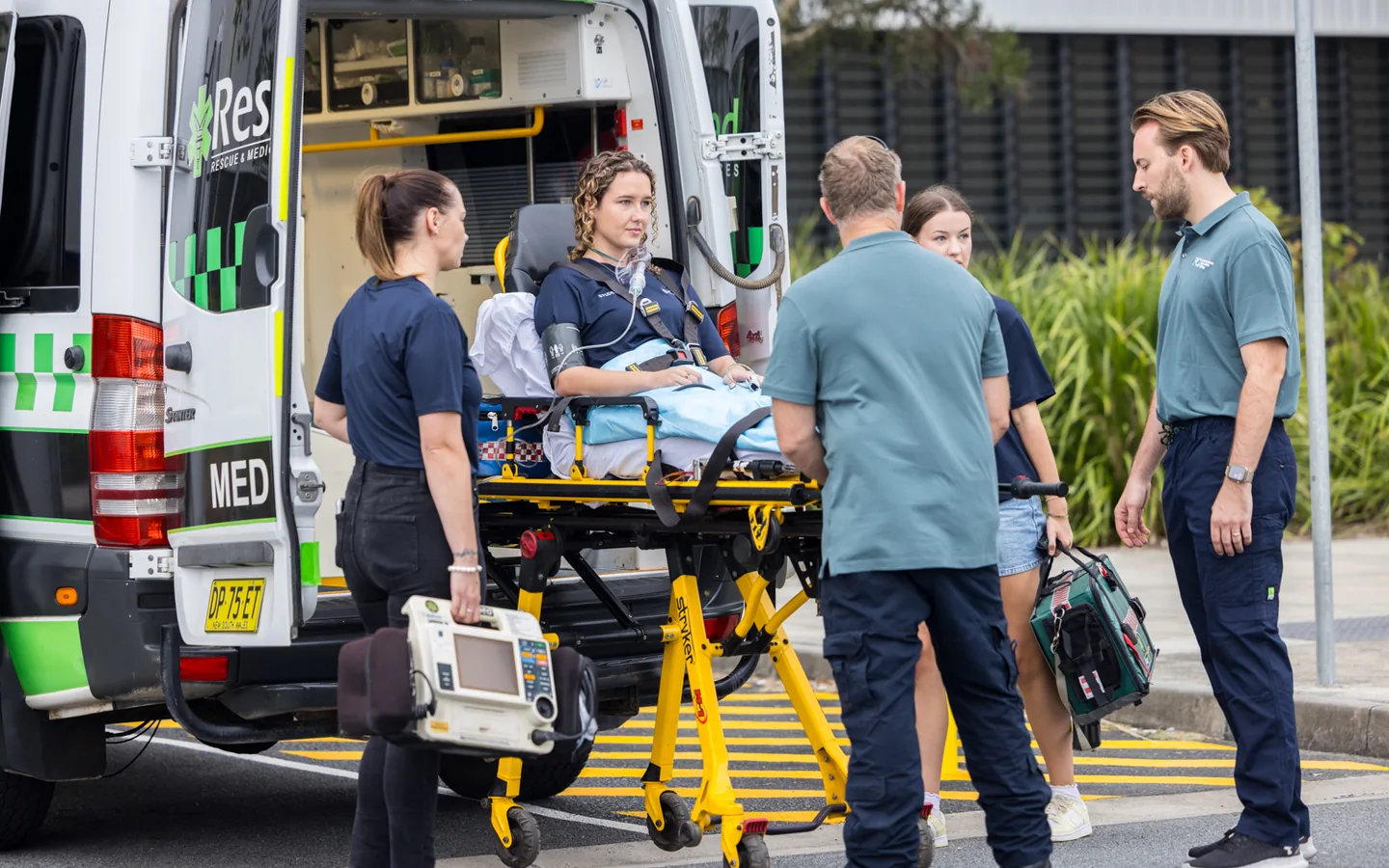
If you’re considering paramedic vs nurse careers, the biggest question is where you want to work. Paramedics go right to the patient, treating people at home or on the side of the road before they reach hospital. Registered nurses usually look after patients once they’ve arrived for care, often over several days. The two paths take a similar amount of study and offer similar starting pay, so your preferred workplace is the best way to choose the right career for you.
Paramedic vs nurse training and registration
Both careers start with an accredited degree that usually takes three years of full-time study to complete. Once you graduate, you’ll register with the Nursing and Midwifery Board as a nurse or with the Paramedicine Board as a paramedic. The two boards regulate their professions under the same national scheme through AHPRA, which means you can’t call yourself a nurse or paramedic without appropriate registration.
The training leading up to registration is where the two careers start to split, mainly because of where you’ll complete your placements. Nursing degrees must include at least 800 hours of workplace experience across four different healthcare settings, so you’ll likely train in hospitals as well as places like aged care. Paramedicine students, on the other hand, complete their placements with ambulance services.
Nursing also offers a shorter way into the profession. You can register as an enrolled nurse after an 18-month Diploma of Nursing, though you’ll work under the direction of a registered nurse. If you’d like to qualify in both professions, a combined nursing and paramedicine degree lets you study for both at once.
Paramedic vs nurse salary in Australia
Graduate nurses and paramedics start on similar pay. In NSW, a first-year registered nurse earns $1,566.70 a week, or about $81,500 a year, from 1 July 2026. NSW Ambulance pays its graduate paramedic interns $80,406 a year.
The nurse vs paramedic salary comparison starts to change once you look beyond graduate pay. According to ABS data from 2025, full-time paramedics earn a median of $2,852 a week, or about $148,300 a year. Full-time registered nurses earn a median of $2,192 a week, or about $114,000. Paramedics also work longer weeks on average, at 47 hours for full-time staff compared to 41 hours for nurses.
Both professionals are paid under state awards and enterprise agreements, so your salary will depend on where you work and how far you progress. Our guide to paramedic salaries in Australia breaks down pay by state.
What paramedics and nurses do day to day
As a paramedic, you’ll spend most of your shifts responding to calls from an ambulance, which means you won’t know where your next patient is until the call comes through. On each call, you’ll assess and treat the patient on scene, then decide whether they need to go to hospital.
Some paramedic roles focus on patients who don’t need emergency care. In NSW, registered paramedics can complete a 10-week Extended Care Paramedic program that trains them to manage patients at home when an emergency department visit isn’t necessary. It’s one of several types of paramedic roles you can move into with experience.
As a nurse, you’ll usually work within a healthcare facility like a hospital or aged care home. You’ll often care for the same patients throughout an entire shift, where paramedics usually hand patients over once they reach hospital. Nursing also lets you specialise in areas like paediatrics or mental health as your career progresses.
Part-time work is also far more common in nursing, with 44% of registered nurses working part-time compared with 10% of paramedics. Both careers still work in shifts, which often include nights and weekends.
Which path is right for you?
Neither career is the better choice overall, so the right one for you depends on the kind of work you want to do each day:
- Paramedicine: This path suits you if you want to treat patients in emergencies outside a hospital, where each call can put you in a completely different situation. Full-time work is also the norm here, so it fits best if you’re after a full-time career from the start.
- Nursing: You might lean toward nursing if you’d like to care for patients over longer periods and eventually specialise in an area like paediatrics or mental health. The higher share of part-time roles can also help if you need flexible hours.
If paramedicine feels like the better fit, you can start looking into becoming a paramedic in Australia and what related roles you might be able to work while you obtain your registration. Already a nurse? Our guide to moving from nurse to paramedic explains how degree credit works. IPC’s Certificate IV in Health Care and Diploma of Emergency Health Care qualify you for casual event medical work that you can fit around your studies and other commitments.
FAQs
Is it harder to become a paramedic or a nurse?
Neither is harder by default, since both careers need an accredited degree of about three years and national registration. Your placements are what separate the two, with nursing students completing at least 800 hours in healthcare settings while paramedicine students train with ambulance services.
Who earns more, a paramedic or a nurse?
Paramedics earn more at the median, with $2,852 a week for full-time workers compared to $2,192 for registered nurses. Graduate pay is much closer, with NSW nurses and paramedic interns starting on almost the same salary.
Can you study nursing and paramedicine at the same time?
Yes, through a combined nursing and paramedicine degree that qualifies you to register in both professions. Few universities offer one, so check the Paramedicine Board’s accredited programs list for current options. Another option is to study a Bachelor of Paramedicine and a Bachelor of Nursing at the same time.
Is paramedic higher than a nurse?
No, the two are separate professions with their own registration boards, so neither ranks above the other. Each works within its own scope of practice, with its own path to senior roles.
Is it better to be a nurse or a paramedic?
Neither is better for everyone. Both take a similar amount of study and offer similar starting pay, so your choice depends on whether you’d prefer emergency work on road or a wider choice of healthcare settings.
Table of contents