


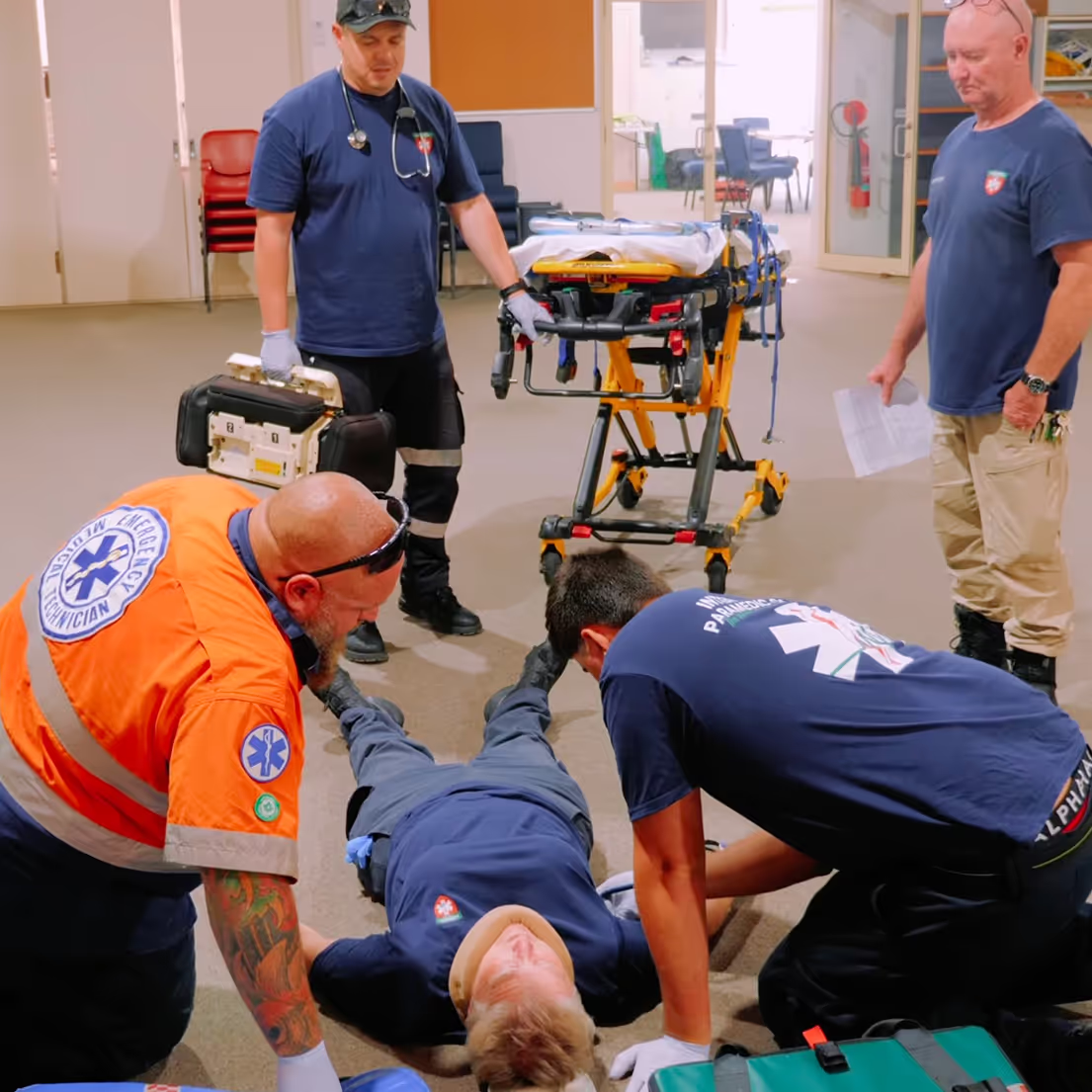
Paramedics in Australia earn between $69,789 and $134,412 depending on where they work and how far they’ve progressed. Base salary only tells you part of it, though, as shift work and overtime can push total earnings well past the official averages. This page breaks down what paramedics earn in each state, what moves you up the scale, what it takes to get registered, and where a paramedic career path starts if you’re not in the industry yet.
How paramedic pay works
Each state ambulance service negotiates its own enterprise agreement, so there’s no national pay scale. Within each one, you move up and earn more as you gain experience and additional qualifications. Generally you start as a graduate intern which means you have finished your university degree and are a registered paramedic with AHPRA. You then become an on-road clinician with one of these services and commence your consolidation training for the given period for that service. Most of the services then have incremental pay increases for years of service and up-skilling your clinical skills to an intensive care paramedic or similar.
Base pay tells you less than you’d think. For example, St John WA pays a student paramedic on the clinical stream $70,484 a year. A student on the operations stream, with the same employer and the same experience level, earns $98,279. The only difference is the shift allowance that comes with working an operational roster.
The Ambulance and Patient Transport Industry Award sets the legal minimum for penalties:
- 17.5% annual leave loading
- $59.71 per rostered shift finishing between 6pm and 8am
- 150% for weekend ordinary hours
- 250% for public holidays
Enterprise agreements have to leave paramedics better off overall than the award, and state services generally pay well above it. It is important to note that these allowances and pay structures are often changing, to be more ‘beneficial’ for paramedics.
Paramedic salary by state
Pay is set at state level, so a paramedic in Sydney and one in Dubbo work under the same NSW agreement. These are the paramedic base salaries, before shift allowances and penalties:
Do you need to be registered to earn this?
For most of it, yes. The paramedic classifications in every state agreement need registration with the Australian Health Practitioners Regulation Agency (AHPRA), which takes an accredited paramedicine degree from a university. However, you can start earning before that. The bottom of each range in the table above is a student, trainee or intern classification, so you do get paid while you train.
You can still do similar work without registering to become a paramedic. Patient transport officers, event medics, and industrial medics all assess and treat patients, though they have different job titles and work to a narrower scope. They also earn less as a result.
The Ambulance and Patient Transport Industry Award sets the national minimum for a patient transport officer at $1,218.00 a week. For example, Ambulance Victoria starts them at $1,242.11 a week. That works out to around $64,600 a year against roughly $72,700 for a Victorian graduate paramedic.
And though the salaries for adjacent positions are lower, so are the barriers to entry. You could start working these roles in just a few months with a Certificate III in Non-Emergency Patient Transport or a Diploma of Emergency Health Care without spending years getting your paramedic degree. Plenty of people who want to eventually become paramedics start working a job with a VET qualification while they get their degree.
How to earn more as a paramedic
The most obvious way to increase your salary as a paramedic is to just get more experience in the job. The salary bands move you up automatically the longer you stay in the profession, so you’ll get raises without having to ask for them.
In addition to that, you can grow your salary faster than the yearly increments by:
- Specialising: Intensive care is the single biggest jump. For example, a Victorian MICA paramedic starts at around $114,000 against roughly $89,100 for an advanced life support paramedic.
- Working the roster: Nights, weekends and public holidays all pay a premium on top of your base rate. For instance, NSW pays overtime at time and a half for the first two hours then double time after that. Two paramedics at the same classification can finish a year thousands of dollars apart depending on how they were rostered.
- Moving states: Queensland and Victoria pay the most for experienced paramedics, though Queensland also pays the lowest entry-level wages. Think about where you are in your career to see if moving for a higher wage would make sense.
- Going private: Mine sites, offshore facilities, event productions, and remote resource operators hire paramedics directly. They tend to offer higher rates because they’re paying for isolation and long periods of time away from home.
Get started with IPC
Paramedic pay grows with time and specialisation, both of which start with your first qualification. If university is the plan, a vocational qualification lets you work in patient transport or event medicine while you study. If it isn’t, those roles are great careers in their own right.
International Paramedic College delivers nationally recognised qualifications from a Certificate II in Medical Service First Response through to the Diploma of Emergency Health Care, delivered online with practical workshops in five states. Talk to a course adviser about where to start.
FAQs
Which state pays paramedics the most?
Queensland and Victoria pay the most for paramedics with experience, both paying over $125,000 a year for intensive care paramedics. South Australia, on the other hand, has the highest entry-level paramedic salary at ~$73,700 a year.
Do paramedics get paid during training?
Yes. Student and trainee classifications are paid positions, starting around $69,800 in Queensland and $72,600 in NSW.
How much do paramedics earn per hour?
Between roughly $35 and $68 an hour at base rates, depending on state and classification. Penalty rates increase that rate on nights, weekends and public holidays.
Table of contents