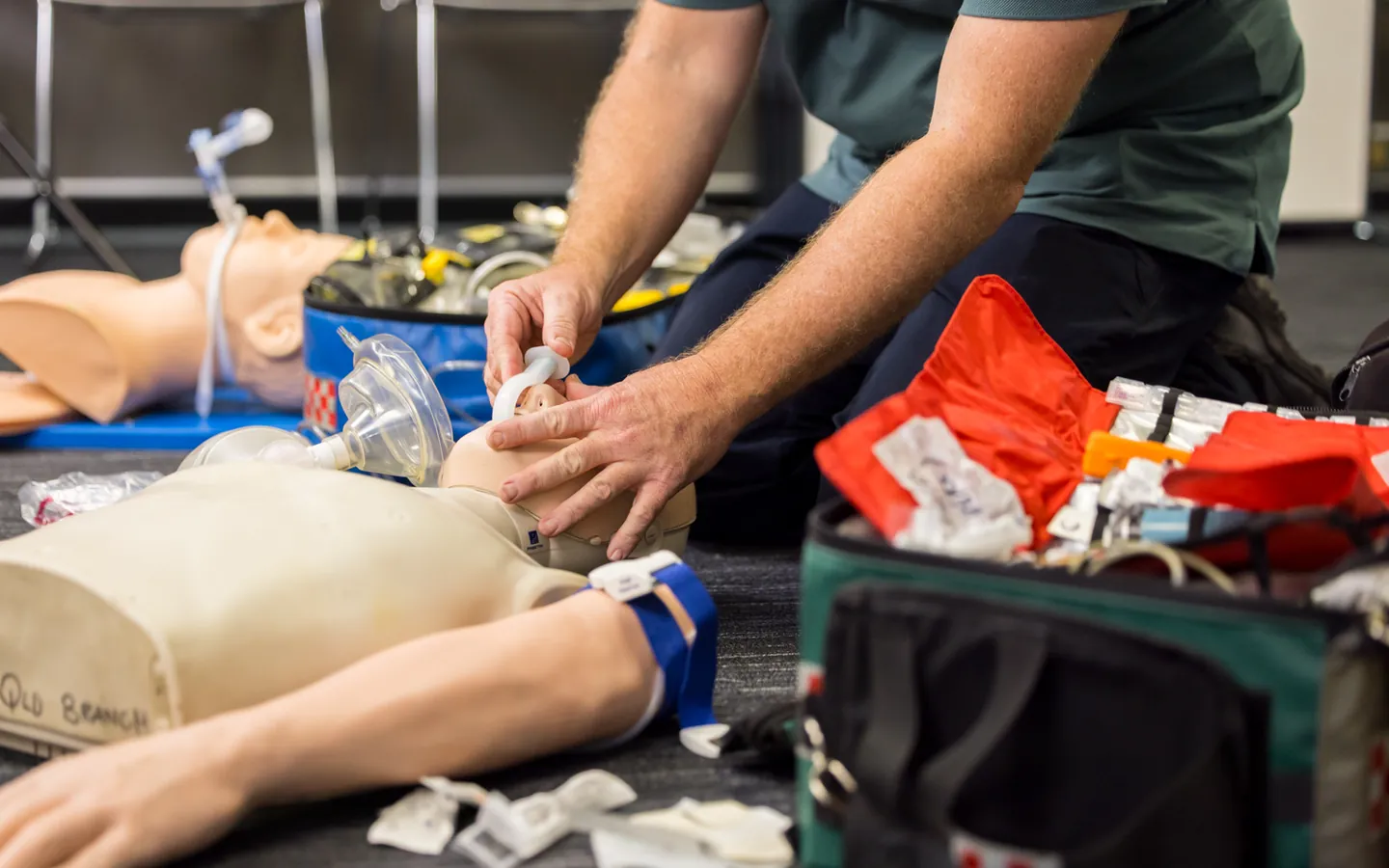
An intensive care paramedic is a registered paramedic trained to treat the most critically ill patients on road, with skills and authority beyond a standard paramedic’s scope. In Victoria, you’ll hear the same role called a MICA paramedic. You cannot become an intensive care paramedic right after school, since every service expects you to have years of experience as a paramedic before they’ll consider you for the role.
What is a MICA paramedic?
A MICA paramedic is Ambulance Victoria’s name for an intensive care paramedic. MICA stands for Mobile Intensive Care Ambulance, which is a term only Victoria uses. Queensland Ambulance Service calls the same tier a Critical Care Paramedic, while most other services use Intensive Care Paramedic.
Whatever the name, it’s one of the most senior types of paramedic on road. Ambulance Victoria keeps its MICA intakes small, training only 14 interns in November 2025 and 24 in its first cohort of 2026. Only experienced paramedics can apply, so every place is competitive.
What does an intensive care paramedic do?
Intensive care paramedics attend the patients whose lives are most at risk. Ambulance Victoria trusts its MICA paramedics to make complex clinical decisions on scene without having to consult a doctor first. In addition to standard paramedic responsibilities, MICA paramedics are responsible for:
- Advanced airway management: You’ll insert breathing tubes for patients who can’t keep their own airway open.
- Intra-osseous medication: Intensive care paramedics can give medication directly into the bone when a vein is too hard to find quickly.
- Complex trauma: Intensive care paramedics are responsible for patients with multiple serious injuries, like those from a major car crash.
- Cardiac and respiratory emergencies: You’ll treat life-threatening heart and breathing conditions that need more than standard ambulance care.
- Clinical leadership: NSW Ambulance describes intensive care paramedics as senior members of paramedic teams, responsible for monitoring the care others give and managing risk to patients.
How to become an intensive care paramedic
You’ll need to work as a paramedic for a few years before a service will consider you for intensive care training. You’ll generally need to:
- Qualify and register as a paramedic first: Complete an accredited paramedicine degree and register with the Paramedicine Board. You’ll then join a state ambulance service through its graduate program once you’ve met its ambulance paramedic requirements.
- Work at least two years on road: State ambulance services expect you to have years of experience before you can start specialist training. Ambulance Victoria asks for two years at advanced life support level before MICA training, while Queensland Ambulance Service requires experience as an Advanced Care Paramedic before you do any critical care work.
- Complete specialist training: Each service trains intensive care paramedics differently, so the course or program you’ll need depends on where you work.
- Get selected: Services choose candidates competitively, so meeting the minimum requirements alone won’t guarantee you a spot.
Intensive care paramedic training by state
Some services train intensive care paramedics in-house, while others expect you to have a university graduate diploma first:
- Victoria: Ambulance Victoria asks for a Graduate Diploma of Specialist Paramedic Practice. Successful applicants then complete its MICA bridging program and an internship on road with qualified MICA paramedics.
- NSW: To become an intensive care paramedic in NSW, you’ll complete NSW Ambulance’s 27-week program, followed by up to two years in dedicated intensive care units.
- Queensland: Queensland Ambulance Service requires a graduate diploma in intensive care or critical care paramedicine. Universities offer these as one-year postgraduate courses, which you complete while you continue working for your service.
- Other states: Services like Ambulance Tasmania and St John WA don’t publish their pathway, so ask your service directly.
How long does it take to become an intensive care paramedic?
It can take anywhere from seven to ten years to become an intensive care paramedic in Australia. Ambulance Victoria estimates it takes about ten years of study and experience to become a MICA paramedic. The shortest route takes around seven years, including a three-year degree, a supervised graduate year, two years on road and roughly a year of specialist training.
Intensive care paramedic salary
Intensive care paramedics earn near the top of their service’s pay scale. A MICA paramedic salary starts at around $114,000 a year under Ambulance Victoria’s enterprise agreement and reaches about $126,300 with experience.
Other states pay in a similar range. South Australia pays intensive care paramedics up to $118,168, while critical care paramedics with St John WA reach about $130,300. Queensland’s specialist classifications go as high as $134,412.
These are base rates before penalty rates for nights and weekends, so take-home pay is usually higher. Each state sets its own paramedic salary scale, so where you live directly affects how much you can make.
Start working in emergency care while you study
Intensive care work is years away for anyone starting today, since it takes a degree and several years on road first. You can start working in pre-hospital care much sooner with the Diploma of Emergency Health Care, which qualifies you for event medical and industrial roles that give you relevant experience. Talk to a course adviser about fitting it around your degree.
FAQs
What does MICA stand for?
MICA stands for Mobile Intensive Care Ambulance. Only Ambulance Victoria uses the term, which it applies to its intensive care paramedics.
Is an intensive care paramedic the same as a critical care paramedic?
Yes, broadly. Queensland Ambulance Service uses the title Critical Care Paramedic for the same senior clinical tier and the Australian Bureau of Statistics lists intensive care paramedic as another name for the same occupation.
Can you become an intensive care paramedic without a degree?
No. You’ll need a paramedicine degree and registration with the Paramedicine Board before any service will consider you for intensive care training.
Do intensive care paramedics work on helicopters?
Some do. NSW Ambulance crews its helicopters with critical care paramedics, so you’ll usually need to become an intensive care paramedic before you can work as a flight paramedic.
Table of contents