


Ambulance paramedic career and qualification pathway
Ambulance paramedics work on the road for a state service, responding to triple zero calls in a two-person crew. You’ll need a paramedicine degree, registration with the Paramedicine Board and a graduate year under supervision before you get there. This page covers what the job involves, what each state pays, and how the eight services recruit.

Understand the path from certificate to career
Every ambulance service in Australia requires a university degree in paramedicine and registration with the Paramedicine Board, then a graduate year training on the road. This guide walks you through the entire process in practice, what you’ll do in your day-to-day once you become an ambulance paramedic, and how each state runs its recruitment process.
What does an ambulance paramedic do?
Ambulance paramedics respond to triple zero calls for a state ambulance service. You work in a two-person crew out of a station, take jobs as dispatch sends them, and treat what you find when you arrive.
The work covers the full range, from cardiac arrests and car crashes through to elderly patients who have fallen and people experiencing a mental health crisis. You’ll assess, treat what you can on scene, then transport them to the hospital and hand over to the emergency department team.
What the job involves
Treating patients is the part of the job you already know about, but these four ambulance paramedic responsibilities are just as important:
Responding to anything dispatch sends you
You don’t get to choose which jobs you attend. Dispatch will assign them to you, and the information you’ll get along the way is often wrong or incomplete. Ambulance services attended 4.5 million incidents in 2024–25, and the Productivity Commission classes fewer than half of those as emergencies. You’ll spend a good share of your shifts on patients who called because nobody else could help them, or because they think that they will be seen faster by a doctor.
Working nights, weekends and public holidays
Ambulance services operate around the clock, so you could be scheduled to work at any time. Shifts are generally 12 hours and almost always run over at the end, because you can’t decide not to go to a triple zero call just because your shift finishes in 10 minutes. Your body adjusts to the pattern eventually, though most paramedics say it takes around a year.
Waiting at a hospital with your patient
Hospitals can’t always take your patients straight away. When no bed is free, you’ll have to wait in the corridor with them, sometimes for hours. You’ll stay clinically responsible for that patient the whole time, which makes you unavailable for the next job.
Carrying what you’ve seen
You’ll attend deaths, including children, and you’ll have to go straight to the next job afterwards. This is a job that requires you to separate your feelings from the situation so you can give all your patients the most pragmatic and timely care. Paramedics talk about an emotional bucket which slowly fills over time. It’s your responsibility to keep that bucket under control.


What ambulance paramedics earn
Each state’s ambulance service negotiates pay with its workforce through an enterprise agreement, so what you earn depends on where you work:
*NSW, Victoria and Western Australia publish weekly rates. Those figures are annualised and rounded. Queensland and South Australia publish annual salaries directly.
Where an ambulance paramedic career can take you
Most paramedics stay on road for several years before specialising. What you do next depends on the clinical hours you’ve accumulated and the qualifications you’ve obtained:
- Intensive care paramedic: You can take on a wider drug and skill scope, working the most complex jobs your service attends. Services select you for it and then train you.
- Flight paramedic: You transport critically unwell patients by helicopter or fixed wing planes, mostly out of remote areas. Services usually want intensive care qualifications plus several years on road before they’ll consider you.
- Extended care paramedic: You treat patients at home instead of transporting them to the hospital. States have grown these teams to take pressure off emergency departments, so the work suits paramedics who prefer clinical reasoning to lights and sirens.
- Clinical education and management: You train new graduates, audit clinical practice or take on station and district responsibility. The clinical work drops away in these roles, which suits some paramedics and frustrates others.
Specialist roles still come with general duties. Your training is as an on-road paramedic first, so if the service needs you for a general ambulance job, they will dispatch you.
Where the jobs are
Each state and territory runs its own service, sets its own entry requirements and recruits on its own cycle. Where you apply changes what you need:
| Service | How they recruit | Graduate program |
|---|---|---|
| NSW Ambulance | Annual intake | Six-week induction, then 12 months transitioning to practice |
| Ambulance Victoria | Continuous, enquiries year round | Supervised on-road work through your first year |
| Queensland Ambulance Service | Scheduled campaigns | 12 months, opening with a six-week induction |
| St John WA | Tied to induction rounds | Not published |
| SA Ambulance Service | Scheduled, with a 12-month recruitment pool | Not published |
| Ambulance Tasmania | Scheduled annual, screening about a year ahead | Three-week induction, then a 12-month fixed term |
| St John NT | Four intakes a year | Not published |
| ACT Ambulance Service | Scheduled, advertised on the ACT jobs site | 15 to 18 months, with study blocks |
How to become an ambulance paramedic
You need three things to become an ambulance paramedic:
- Complete an accredited paramedicine degree: The Paramedicine Board of Australia accredits every course that leads to registration, and all 18 providers on its list are universities. A bachelor degree takes three years full time, with an approved postgraduate qualification as the alternative for people who already hold a degree in something else.
- Register with the Paramedicine Board through AHPRA: Most services want you to be fully registered before you start, though some may accept applications from final-year students and from people about to graduate.
- Complete a graduate program: Every service employs new paramedics on a graduate classification for their first year, working real jobs next to a qualified paramedic who signs off on your progress. Most last 12 months, often starting with a few weeks of induction training.
No state ambulance service currently offers an entry route that starts below a degree. Vocational qualifications still get you into pre-hospital work. Becoming a patient transport officer is the most common way in, along with event medicine and industrial response.
Recommended courses
None of the following qualifications lead to paramedic registration, but they do get you working in pre-hospital care while you study or help you decide whether this field suits you before you commit to a degree.
HLT31120: Certificate III in Non-Emergency Patient Transport (NEPT)
Train for patient transport work in a structured, supportive learning model.
HLT41120: Certificate IV in Health Care
A strong foundation in emergency health care, with online learning and practical training.
HLT51020: Diploma of Emergency Health Care
Our flagship qualification for pre-hospital care is delivered online, with hands-on workshops.
A simple training sequence
The degree is the only way to become a paramedic, though plenty of people study a vocational qualification first to get working sooner or to test whether the field suits them. After any of these, a Bachelor of Paramedicine is the only qualification that leads to paramedic registration. It takes three years full time and universities are the only providers. These are the vocational levels:
Start here if you’ve never worked in healthcare. You’ll learn emergency care basics and how to work safely around patients.

This one suits people heading into frontline health or community care. It gives you broader healthcare skills than the Certificate II.
Take this if you want stronger clinical decision-making or if you already work in health and want to formalise what you know.
This is the qualification that gives you access to private emergency work, including mine sites and event medicine.
Do you need a degree?
Yes. Every ambulance service requires a bachelor degree in paramedicine or an approved postgraduate equivalent, plus registration with the Paramedicine Board of Australia through AHPRA. All 18 accredited providers are universities.
Since paramedics became a registered profession, vocational qualifications don’t get you on the road with a state service anymore, though they will get you working in pre-hospital care. Non-emergency patient transport is the most common way in.
First aid and CPR courses
A first aid certificate only takes a day and tells you whether the hands-on side of this work suits you. You’ll also need one before you can start some units in the Diploma.
HLTAID009: Provide Cardiopulmonary Resuscitation
Nationally recognised CPR training. Essential skills for the workplace, community and home.
HLTAID011: Provide First Aid
Nationally recognised First Aid training with online theory and face-to-face practicals. Includes HLTAID009 Provide Cardiopulmonary Resuscitation.
HLTAID012 First Aid in an Education & Care Setting
Designed for educators and childcare workers, this course focuses on responding to emergencies involving infants and children, meeting ACECQA and regulatory requirements. Includes HLTAID009 Provide Cardiopulmonary Resuscitation.
How to follow the right progression
You don’t need to have everything mapped out on day one. Start with a realistic step, then build a clear course progression plan as you go.
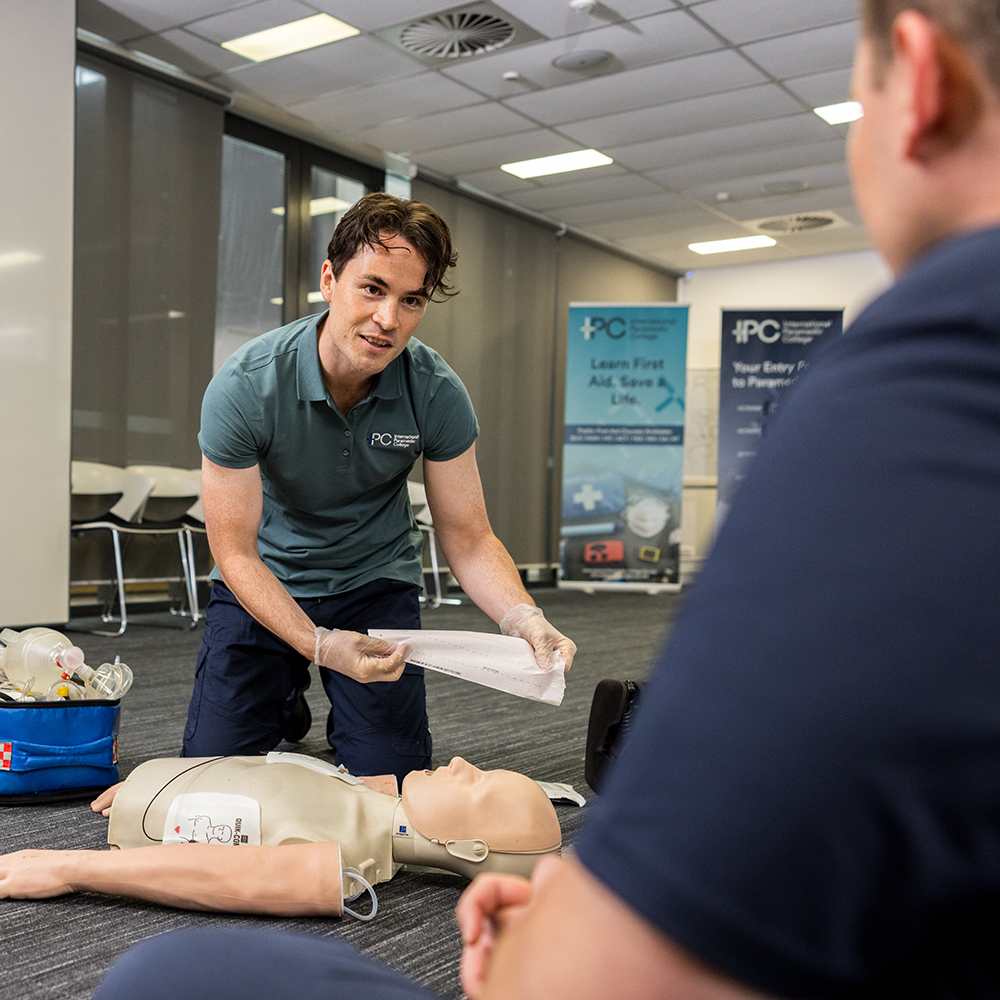
Choose your starting level
Pick the qualification level that suits your current confidence and experience so your learning feels achievable.
Build skills through structured training
Complete your learning at a steady pace, focusing on competence rather than rushing, so you’re well-prepared for the next step.
Progress to the next qualification stage
When you’re ready, move up to the next level in the paramedic training sequence with clearer direction and stronger foundations.
Roles that connect with this pathway
Ambulance work isn’t the only place paramedic skills are useful. These roles hire people with vocational qualifications:
FAQs
Below, we’ve answered common questions about becoming an ambulance paramedic.
How long does it take to become an ambulance paramedic?
Around four years. A bachelor of paramedicine takes three years full time, followed by a graduate year with an ambulance service before you can work unsupervised.
Can you become an ambulance paramedic without a degree?
No. Every state and territory service requires an accredited paramedicine degree plus registration with the Paramedicine Board. Vocational qualifications can get you into patient transport, event medicine and industrial response, though not onto an ambulance with a state service.
What’s the difference between an ambulance paramedic and an intensive care paramedic?
Intensive care paramedics can administer more drugs and perform more advanced procedures, so they attend the most serious jobs. Services select experienced paramedics for that training after several years on the road.
Do you need to be registered before you apply?
It depends on the service. Several accept applications from final-year students and recent graduates, though registration has to be in place before you start. Check the requirements for the service you’re applying to.
Why IPC is a smart place to begin
International Paramedic College supports your ambulance paramedic pathway by keeping learning practical and helping you understand what to do next.
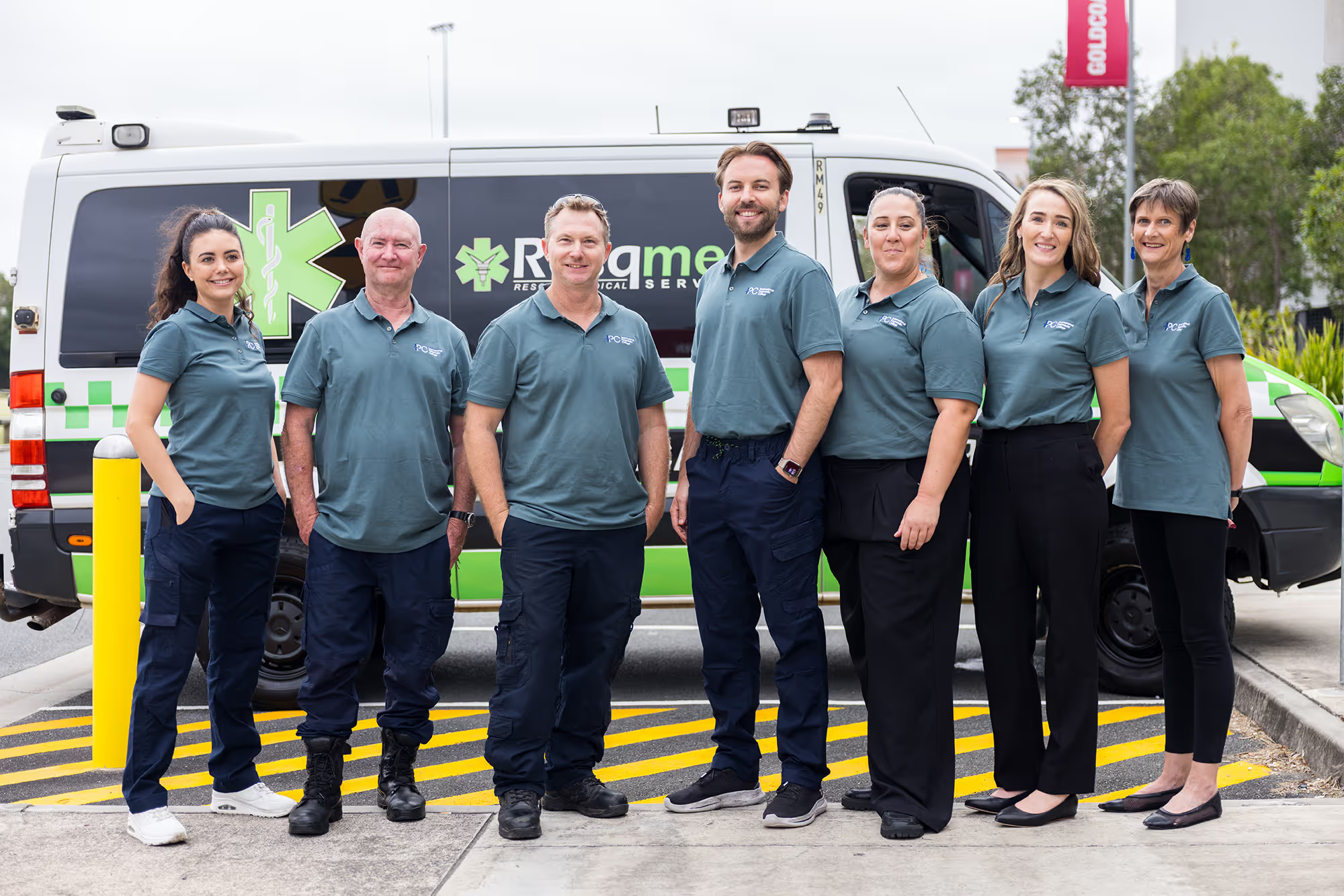

Training with real-world focus
Practical skill development and scenario thinking that's built for emergency-care readiness.

Clear progression support
We help you understand your next step in the paramedic training pathway.

Confidence-building structure
A guided learning model that keeps things achievable and goal-oriented.
Recognised training standards
When you’re working towards an ambulance paramedic role, you want training that’s credible and consistent.
Registered Training Organisation (RTO 45284)
International Paramedic College is an ASQA-approved Registered Training Organisation (RTO 45284) that delivers nationally recognised training and qualifications in Australia.

Nationally recognised qualifications
We deliver nationally recognised qualifications and accredited training that support real employment and workplace outcomes.

Certification you can use anywhere
Upon completing training, your results lead to a recognised certification that can be used for employment, workplace compliance, and further study.

What our students say
Students often tell us the biggest difference is clarity. This includes knowing what to study first, what to build next, and how to stay motivated through the process.
“IPC made learning feel achievable. The trainers explained things clearly, the practical sessions were hands-on, and I finished the course feeling genuinely more confident.”

“I chose IPC because when I did research I found they had really good feedback from the students and students coming back to do more courses so I believe it’s the right school for me and the price was really good.”
“The structure was straightforward and the support was there when I needed it. Workshops were practical, and I always knew what I was working toward.”
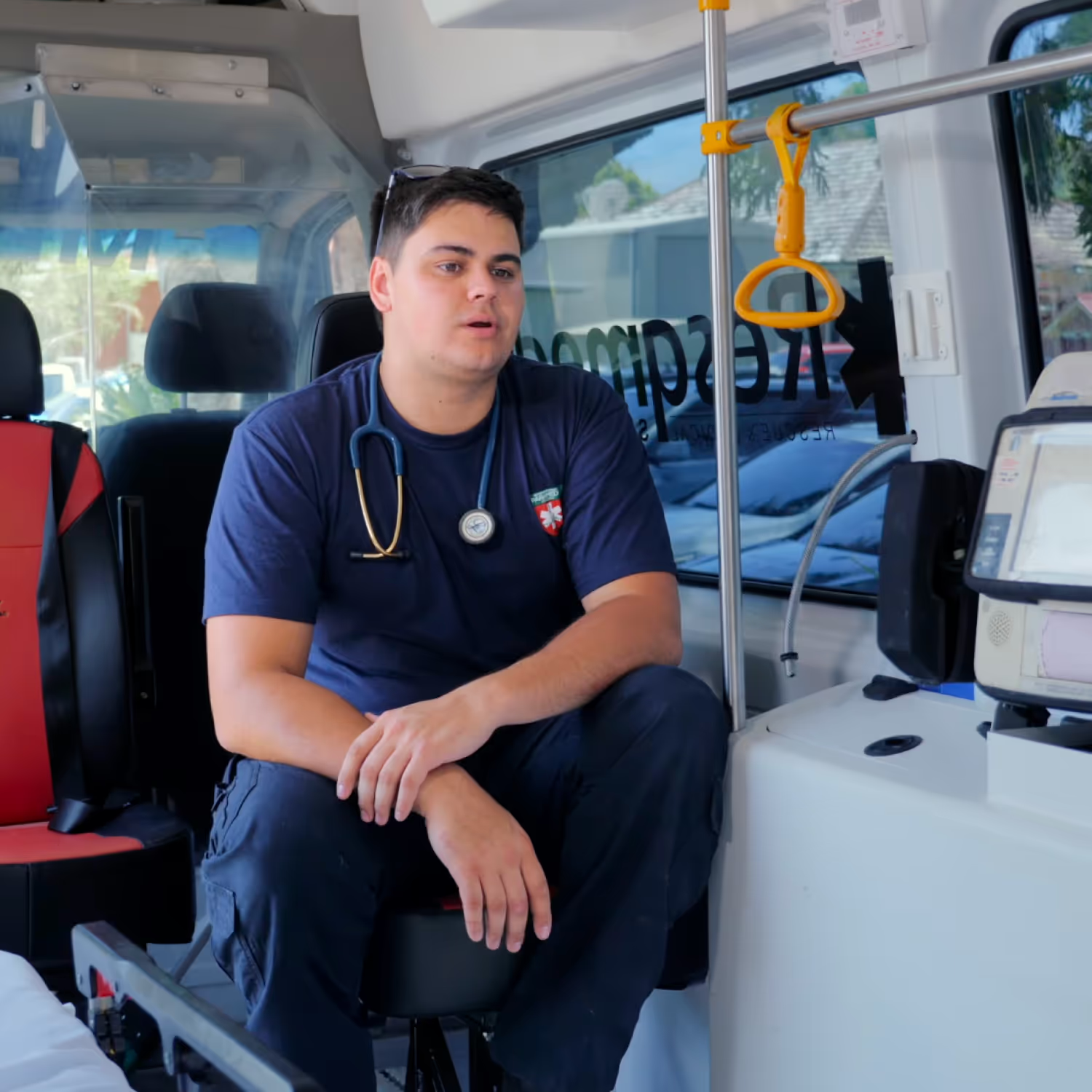
“I wanted training that felt real. The scenarios, feedback and support helped me build skills I can actually apply, especially when things get stressful.”
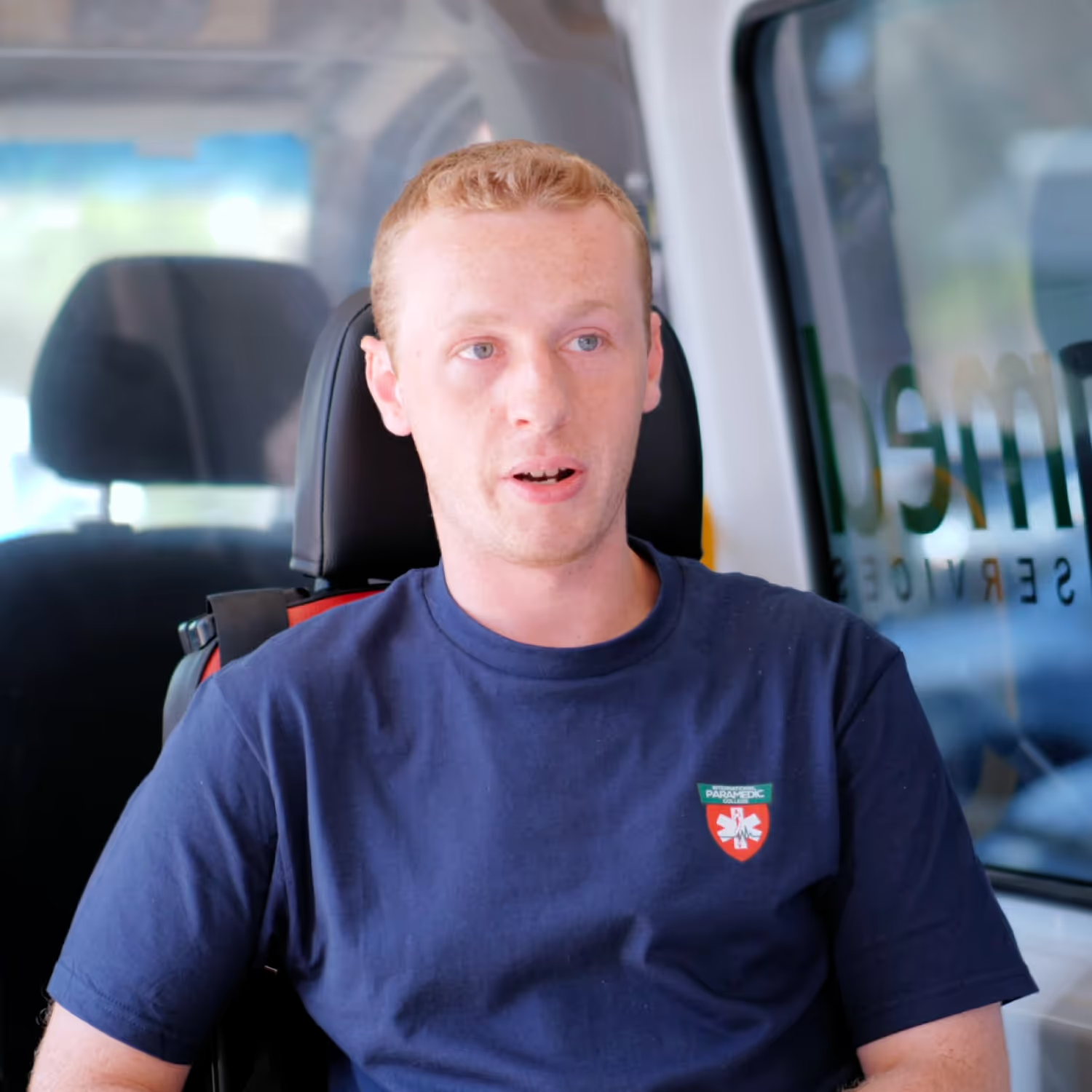
“What stood out was how approachable the team is. They teach in a calm, practical way and make sure you understand the ‘why’, not just the steps.”

“I learned more than skills - I learned how to think clearly under pressure. The practical training and feedback helped me feel ready for real-world situations.”

Ready to plan your ambulance paramedic pathway?
If you want help choosing the right starting point or mapping your next stage, our team can guide you through your options.
Our licences
Our qualification pathways for ambulance paramedic work are built around nationally recognised training and industry-aligned standards.

Insights and guides
Explore these articles to learn more about ambulance paramedic work, the qualifications behind it and how your study choices can shape your career.


Get help starting your healthcare journey
If you’re exploring entry-level healthcare training, our team can guide you through enrolment, study options, and what to expect from this course.
